1. Home
  2. Knowledge

Knowledge

Know-how for design engineers and buyers.

Answers, technical terms and tools covering cable assembly, wiring harness manufacturing and joining technology, from the day to day work of our plant in Kitzingen.

Articles

Cable assembly explained clearly.

Basics, joining technology, testing and enquiry, written from the day to day work of our plant in Kitzingen.

Basics

Cable assembly: process, methods and what determines the price

The work steps, the methods and the factors that determine price and delivery time.

Basics

Wiring harness, cable set, assembled cable: what is the difference?

What the terms mean, how they differ and what that means for your enquiry.

Joining technology

Crimping, soldering or ultrasonic welding? Joining techniques compared

How the three most important connections are made, where their strengths lie and how they are tested.

Quality

Testing wiring harnesses: which tests make sense when

Process monitoring, final testing, records and how to define the right scope of testing.

Guide

Requesting a wiring harness: what your cable assembly supplier needs

Documents, quantities, requirements, scope of testing: everything that belongs in a good enquiry.

Joining technology

Single wire seals and cavity plugs: how connectors are sealed

How seals and cavity plugs protect connectors and what matters when they are fitted.

Design

Cable protection in the wiring harness: corrugated tube, braid, heat shrink or tape?

Corrugated tube, braid, heat shrink and tape compared: how to choose the right protection.

Design

Choosing the right cable cross section: current, length and voltage drop

Current carrying capacity and voltage drop, with a formula and a worked example for the 12 V on board power system.

Application

CAN bus cable sets: getting twisting, termination and shielding right

Twisted cores, a 120 Ω termination, linear topology and the typical sources of error.

Design

Selecting connectors for wiring harnesses: the most important criteria

Current, IP rating, coding, locking and availability: what matters when selecting.

Purchasing

Cable assembly from Germany: when it pays off

Unit price against total cost: when short distances, flexibility and fast samples tip the balance.

Quality

PPAP for wiring harnesses: documents and the series release process

The 18 elements, the submission levels and what evidence is typically required for wiring harnesses.

Design

Wiring harness design with EPLAN: from 3D model to assembly board

Requirements, 3D routing, assembly board drawing, bill of materials: how a design becomes ready for production.

Joining technology

Twisted cables in the wiring harness: why and when

Noise immunity, data buses, lay length: when twisting pays off and how it works in series production.

Application

High voltage cable sets: requirements for insulation, shielding and testing

Insulation, shielding, touch protection and testing: what makes high voltage cable sets special.

Purchasing

Reducing wiring harness costs: the key levers in design and purchasing

Variants, components, lot sizes: where you can save and where you had better not.

Joining technology

Wire end ferrules: when they are needed and how to crimp them correctly

What wire end ferrules are for, which types exist and what matters when crimping.

Manufacturing

The assembly board: how wiring harnesses are built to size

What an assembly board is, how the assembly process works on it and why it makes series reproducible.

Quality

Testing crimp quality: crimp height, pull-out force, micrograph and force monitoring

Crimp height, pull-out force, micrograph and force monitoring: how to recognise a good crimp.

Design

Shielding in the wiring harness: types, effect and correct termination

Braid, foil, drain wire: how shields work and how to terminate them correctly at the connector.

Manufacturing

Cable marking in the wiring harness: methods and practice

Printing, heat shrink tubing, labels, colour codes and what makes marking good.

Joining technology

M8 and M12 circular connectors: coding, pole counts and applications

Thread, pole counts, coding and degree of protection: the standard interfaces of automation explained.

Guide

Having a wiring harness rebuilt: from sample to new production

Replacement requirements, small series or classic cars: how a sample becomes a production ready wiring harness again.

Design

Automotive cables FLRY and Co.: the main cable types in a wiring harness

What FLRY-A and FLRY-B mean and how to choose the right cable type for the wiring harness.

Basics

Conductor classes and strand construction: why fine stranded is not always fine stranded

Class 1 to 6: what the conductor classes mean and what that means for crimping and connection.

Joining technology

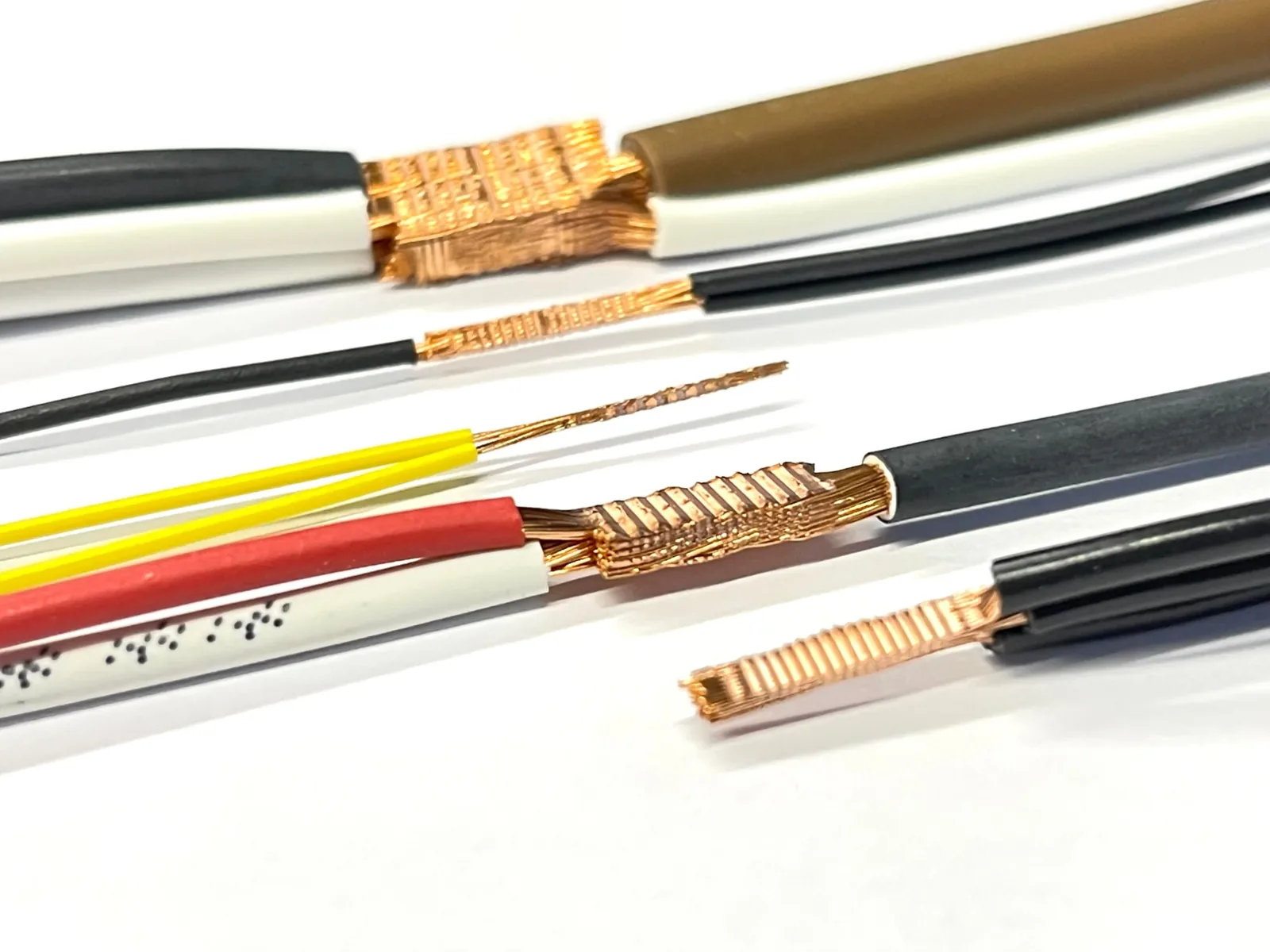
Ultrasonic splice in the wiring harness: structure, applications and quality

How an ultrasonic splice is made, what it is needed for and how its quality is assured.

Purchasing

Outsourcing cable assembly: when make or buy pays off

Know-how, purchasing, machinery and testing: when outsourcing pays off and what to look for when you choose a supplier.

FAQ

Frequently asked questions about cable assembly and wiring harnesses.

Your question is not here? Our sales team will be glad to help: by telephone on +49 9321 3924811 or by e-mail to info@powertune.de.

Basics

What is cable assembly?

Cable assembly is the custom manufacture and assembly of ready to install cables, leads, wiring harnesses and complete cable systems to customer specification. Individual cables are combined with connectors, contacts, wire end ferrules, protective sleeving, heat shrink tubing and further components to form a ready to use assembly.

Cable assembly is used in many industries such as the automotive industry, mechanical engineering, electrical engineering, medical technology, special vehicle construction and industrial automation. Professional cable assembly reduces installation times, minimises sources of error and ensures consistently high quality.

Modern cable assembly also covers the development, design, manufacture, electrical testing and documentation of individual cable systems for demanding industrial applications.

Which fields of application are there in cable assembly?

Cable assembly is used in almost every technical and industrial field in which electrical power, signals or data have to be transmitted reliably. The main fields of application are:

  • Automotive industry: wiring harnesses and cable sets for cars, commercial vehicles and electric vehicles as well as driver assistance and safety systems.
  • Machinery and plant engineering: control cables, power cables and complex cable systems for production plants, machine tools and automated manufacturing processes.
  • Electrical engineering and control cabinet construction: ready to connect cables and assemblies for control cabinets, controls, distribution boards and industrial electronics.
  • Industrial automation: assembled cables for sensors, actuators, robotics, PLC controls and Industry 4.0 applications.
  • Special vehicle construction: cable systems for fire service and municipal vehicles, construction machinery, agricultural machinery and special purpose vehicles.
  • Medical technology: precision cables for medical devices, diagnostic and therapy systems with the highest demands on reliability and safety.
  • Telecommunications and data technology: data cables, network cables and connection systems for communication, network and IT infrastructures.
  • Aerospace: weight optimised and heavy duty cable systems for aircraft, satellites and safety critical applications.
  • Energy and environmental technology: cable assemblies for photovoltaic systems, energy storage, charging infrastructure and wind turbines.

Companies therefore receive connection solutions that match their technical requirements, installation situations and quality standards exactly.

What are the benefits of custom cable assembly?

Custom cable assembly adapts cables, wiring harnesses and complete cable systems precisely to the technical requirements at hand. Compared with standard solutions, users benefit from higher reliability, shorter installation times and better use of space. Because cables, connectors, cross sections, lengths and protective components are matched exactly to the application, sources of error decrease and operational safety increases.

Ready to install cable systems are fitted directly. That saves installation time, lowers the total cost and improves process reliability. The main benefits:

  • Precisely fitting solutions for individual applications
  • Shorter assembly and installation times
  • Fewer sources of error and less risk of failure
  • Higher quality and operational safety
  • Better use of space and cable routing
  • Lower production and follow-up costs
  • Flexible implementation from prototype to series production
  • Documented testing and quality processes
What is the difference between a wiring harness, a cable set and an assembled cable?

An assembled cable is a single cable with terminations at its ends. A cable set combines several assembled cables that are installed together. A wiring harness bundles many cables with branches, connectors and protection into a fixed structure that fits the installation space exactly. The terms are not used in the same way everywhere. What counts is what the drawing and the bill of materials say. More in the article Wiring harness, cable set, assembled cable.

Is it worth outsourcing cable assembly?

In most cases yes. A specialised cable assembly supplier brings the expertise and works considerably more efficiently thanks to synergy effects: it buys cables, contacts and connectors in larger quantities and processes them on production machines that rarely pay off for a single operation. Fully automatic cable processing machines, crimp tools for every contact system and test systems cost a great deal of money.

Meanwhile your team can concentrate on your own product. More in the article Outsourcing cable assembly.

Crimping or soldering: which is better?

For most wiring harnesses crimping is the first choice: the connection is made without heat, it is reproducible and it can be monitored in the machine. Soldering is used where components or printed circuit boards call for it; we join the strands of several cores by ultrasonic welding. You will find the comparison in the article Crimping, soldering or ultrasonic welding?

Enquiry and quotation

Which documents do you need for a quotation?

Ideally a drawing or 3D data, a bill of materials with cable types, cross sections, lengths and connectors, the pin assignment, the required quantity and details of the environment and the scope of testing. You can upload files directly in the enquiry form. What exactly belongs in a good enquiry is shown by the enquiry checklist, also available as a fillable PDF.

Can I also enquire without a finished drawing?

Yes. A sample, a sketch or photos are enough to get started. In the enquiry form you can also sketch your wiring harness directly. On request our design office produces the drawing with EPLAN. More under Development & design.

How quickly will I receive a quotation?

Usually within two to three working days. Exactly how quickly depends above all on the material: standard components that we hold in stock are costed immediately; for exotic special parts we wait for our suppliers to quote.

If details are missing, for example on connectors or on the scope of testing, we clarify them with you directly instead of building the quotation on assumptions.

Why do quotations from different cable assembly suppliers differ?

Because very different services can lie behind the same drawing. Always compare quotations on the same scope:

  • Material: original components or alternatives, cable types and protection
  • Process: crimping with force monitoring and a measured crimp height, or without
  • Testing: electrical testing of every wiring harness or spot checks only
  • Records: test records, initial sample inspection, PPAP and traceability
  • One-off costs: tooling, assembly board and test adapters, included in the unit price or shown separately

More on the cost drivers in the article Process and price.

What does a wiring harness cost?

That depends above all on the number of cables and terminations, the connectors and contacts, the protection such as corrugated tube, braid or tape, the scope of testing and the quantity. One-off costs for tooling, the assembly board and test adapters may be added. There is therefore no flat rate price. The cost drivers are explained in the articles Process and price and Reducing wiring harness costs.

Do you charge a copper surcharge?

No. We do not apply a copper surcharge. The price from our quotation applies.

Is there a minimum order quantity?

No. We make samples and single pieces just as we make small series and series production. How the unit price develops with the quantity is shown in the quotation. For recurring demand we agree framework contracts with call-offs.

How does a project run?

In six steps: enquiry, clarification and quotation, design, sample and release, series production, then delivery and support. What happens in each step is shown on the page How a project runs.

Development and manufacturing

Can you develop the wiring harness for us?

Yes. Since 2023 we have been developing cable systems in our own CAD design office with EPLAN, from the cable routing in the 3D model through the manufacturing drawing to the bill of materials and the sample. You can commission the design only, the manufacturing only, or both.

Can small series or prototypes be manufactured as well?

Yes. Alongside series production, Powertune makes prototypes, single pieces, pre-series and small series. New products, machines, plants or vehicles can therefore be fitted with individually assembled cables and wiring harnesses while still in the development phase. Changes are implemented, tested and optimised quickly before series production starts.

Powertune supports you with, among other things:

  • Sample and prototype manufacturing
  • Pre-series and small series
  • Development and test projects
  • Product changes and improvements
  • Series launches and scaling up production
  • Individual wiring harnesses and cable systems to drawing or sample
How long do samples and series take?

That depends on the scope, the complexity and the availability of the components. We make samples at short notice. Our stock of special cables and semi-automatic machines with short set-up times help here. Series orders are scheduled by our MES according to priority and date. We state the specific delivery date in the quotation.

Which cable cross sections do you process?

From 0.013 mm² to 70 mm², and up to 95 mm² where required: from the finest strands to battery and power cables. Large cross sections and cable lugs are processed by hand with the appropriate tooling. You can compare AWG and mm² in our AWG table.

Do you manufacture high voltage cable sets?

Yes. We supply high voltage cable sets with an insulation concept, shielding and safe separation of high and low voltage. We define the scope of testing, including the high voltage test, for each project. More in the article High voltage cable sets.

Do you work under ESD protection?

Yes. For electronic assemblies and sensitive components we have an ESD protected room. ESD standards have applied here since 2011, and soldering and tinning work is carried out at ESD protected workstations.

Can we supply material ourselves?

Yes. You can supply us with cables, connectors or special components that you source yourself. For assemblies, customers often also supply the devices into which we install the wiring harnesses. We take on the complete module assembly.

Can we still introduce changes at short notice?

Yes. We implement changes flexibly and seamlessly in series production. You can introduce changes up to shortly before your order. Every change status is documented in the drawing, the bill of materials and the work instruction, so that sample, drawing and series match.

How are wiring harnesses marked and packed?

To your specification: with labels, for example with the part number and a DataMatrix code, by inkjet printing on the cables, or packed in resealable bags. The methods are compared in the article Cable marking.

Quality and records

How is the quality of the assembled cables ensured?

Through standardised manufacturing processes, qualified staff and comprehensive test and inspection procedures. All work steps are documented during production and carried out to defined quality standards: with visual inspections, dimensional checks, crimp force monitoring, electrical continuity and short circuit tests as well as function and load tests.

On request we also produce test records, measurement reports and customer specific documentation. More under Quality management.

How is the quality of a crimped connection tested?

During production, crimp force monitoring records the force curve of every crimp and detects missing strands, for example. The crimp height is measured before production starts; pull-out force and micrograph are further customary records. More in the article Testing crimp quality.

Is every wiring harness tested?

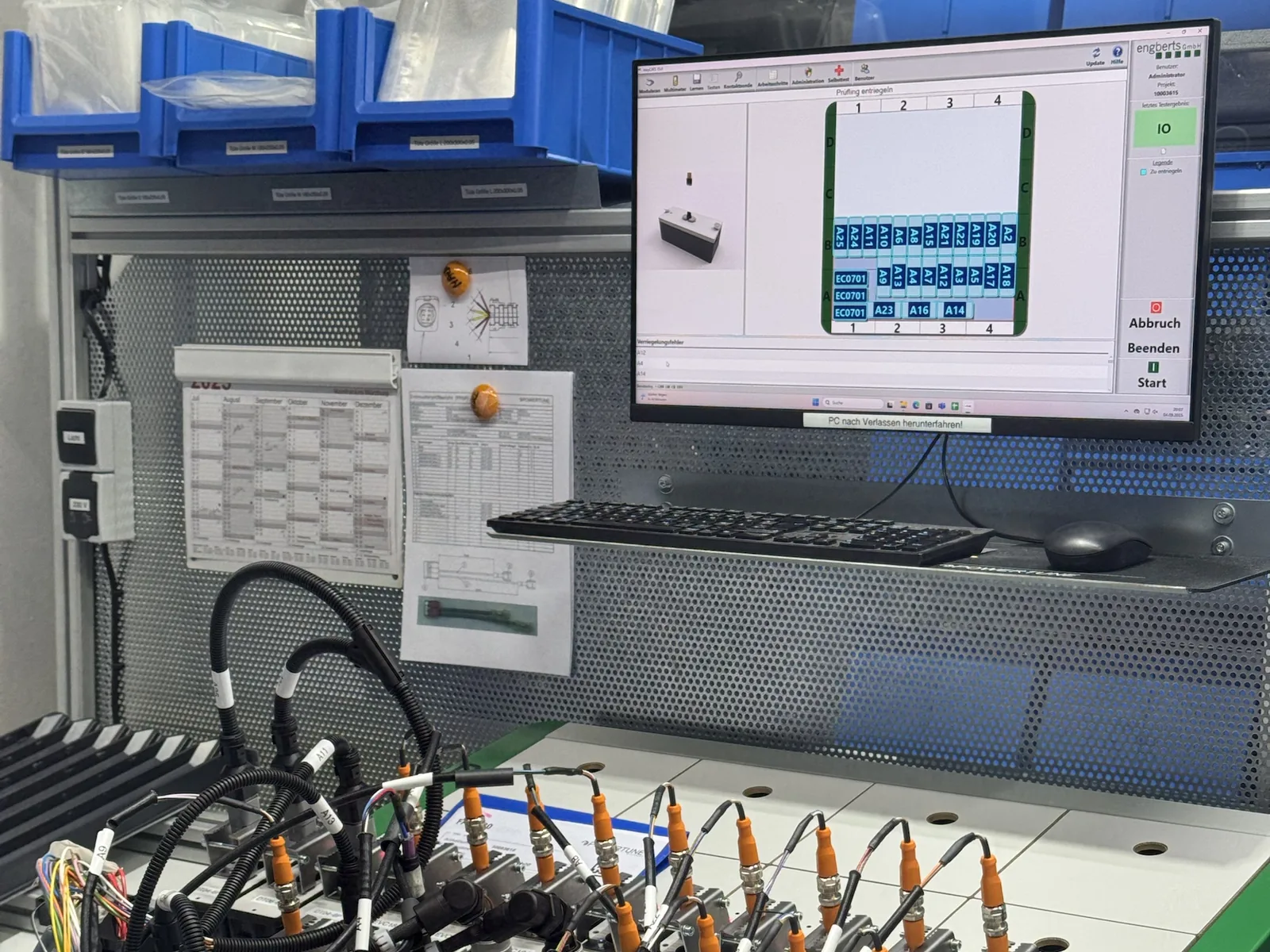
Yes. Every wiring harness goes through a final electrical test for pin assignment, continuity and short circuits, on two test systems from Engberts (iCAT) or on test boards. High voltage, function and load tests are added depending on the requirements; you receive test records with every delivery on request. More under Testing & documentation.

Do I receive documentation, for example to PPAP?

Yes. We supply bills of materials, test records on request and, for series projects, documentation to PPAP. We define which documents you need at the start of the project. More in the article PPAP for wiring harnesses.

Which standards do you work to?

The basis is our quality management to ISO 9001. Customer specific standards, drawing requirements and acceptance criteria are agreed for each project and implemented in a documented way. More under Quality management.

How does traceability work?

Since 2019, batches and processes have been fully traceable, and since 2021/2022 an MES has scheduled the production orders. Every delivery can therefore be traced down to the individual cable, from the material used to the finished wiring harness.

How is a complaint handled?

In a structured way with an 8D report, based on the requirements of IATF 16949: we narrow down the fault, take immediate action, determine the cause and eliminate it permanently with effective measures. Thanks to batch and process traceability, it is quick to establish which deliveries are affected.

Are factory visits and supplier audits possible?

Yes, we would be glad to arrange one. Simply make an appointment, by telephone on +49 9321 3924811 or by e-mail to info@powertune.de. We will send you our ISO 9001 certificate on request.

Delivery and cooperation

Do you deliver abroad as well?

Yes, we deliver wiring harnesses worldwide. Deliveries currently go to the USA, the United Kingdom, Switzerland, Austria, Slovenia and Spain, among others; we have also delivered to Singapore.

Do you offer framework contracts and kanban?

Yes. Framework contracts with call-offs are readily possible, as is supplying your assembly line through kanban racks. Our MES schedules production by date and priority.

How sustainable is production at Powertune?

Our plant runs on electricity from our own photovoltaic system with an output of 100 kW. Since May 2026 a 32.4 kWh battery has supplemented the system; this allows us to supply 100 percent of our own needs all year round, even during a power cut. More in the post Our own solar power.

Glossary

Technical terms, briefly explained.

The key terms from cable assembly, wiring harness manufacturing, testing and purchasing, with links to our articles.

8D reportComplaint handling
Method for handling complaints in eight steps: from the team and the problem description through immediate action and root cause analysis to corrective action, verification of effectiveness and prevention.
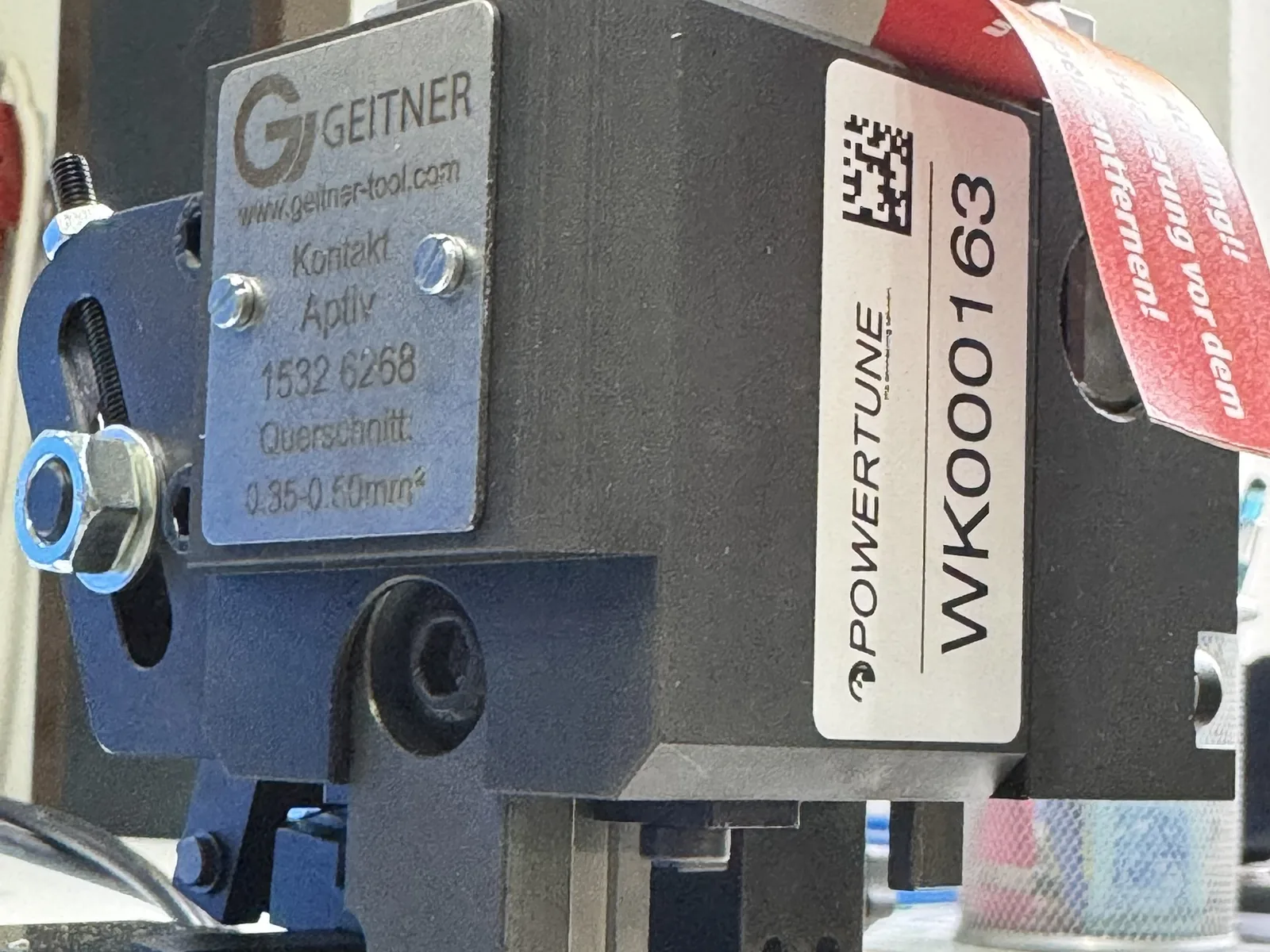
ApplicatorCrimp tooling
Interchangeable tool for a crimp press or a fully automatic cable processing machine, matched to one contact system. It feeds the contacts from the reel and crimps them onto the cable.
Assembling cablesBasic term
Making cables ready to connect: cutting to length, stripping, fitting contacts or connectors, marking and testing.
Assembly boardAssembly
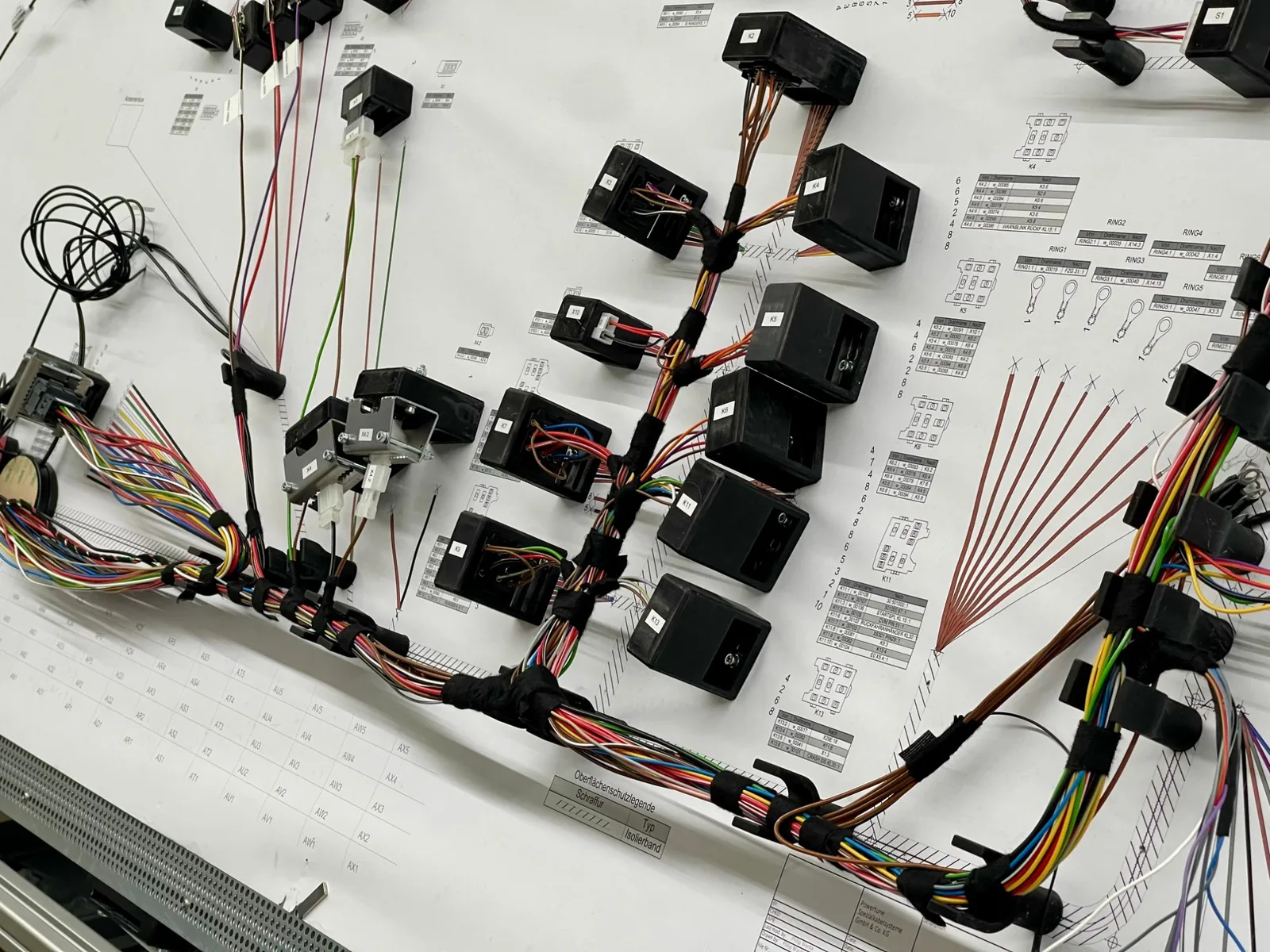
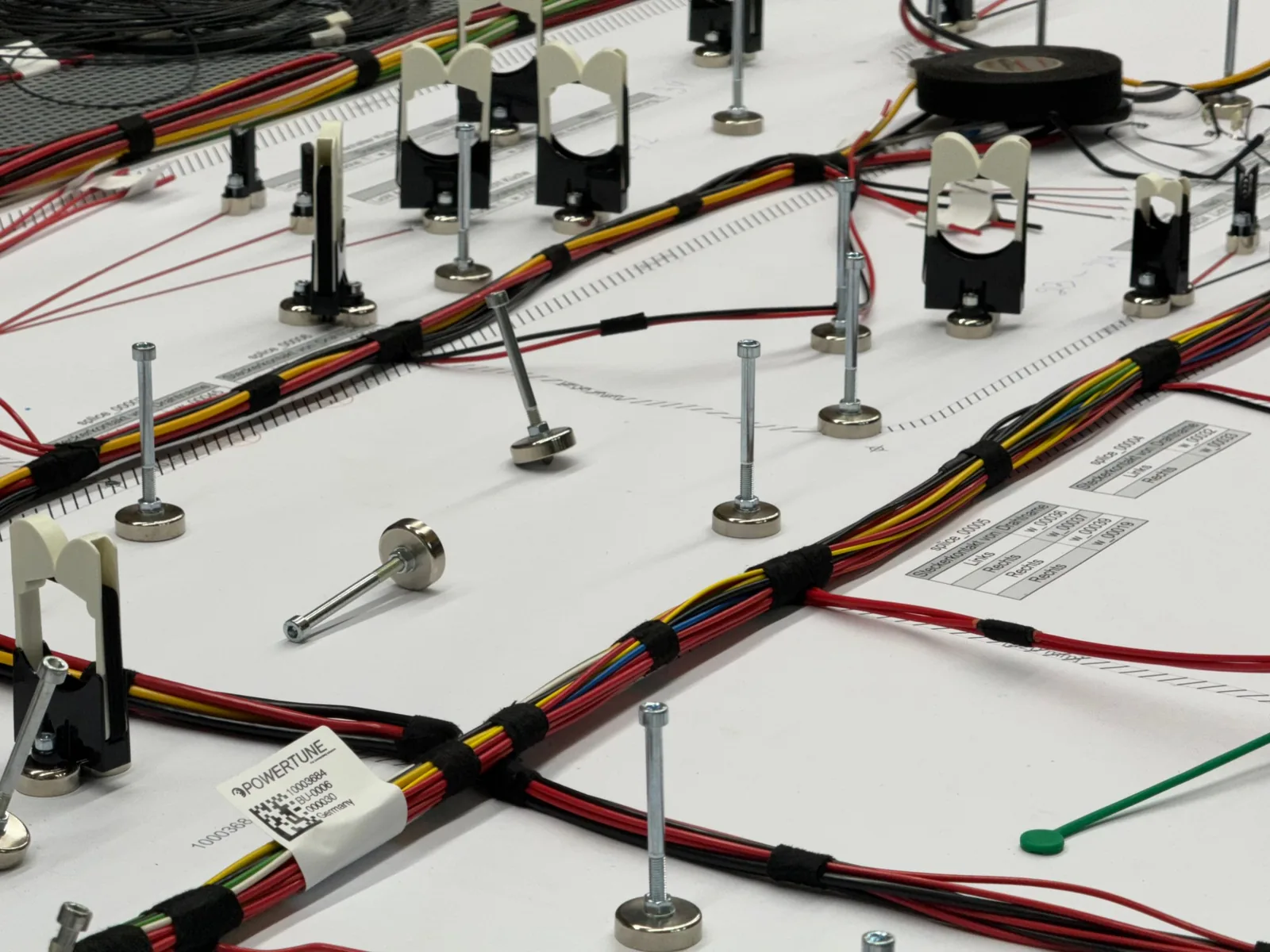
Board carrying the 1:1 drawing of the wiring harness. Holders and pins define the routing, the branches and the connector positions; also called a nail board. The assembly board
AWGAmerican Wire Gauge
North American measure for conductor diameter and cross section. The smaller the AWG number, the larger the cross section. Conversion table
Bill of materialsDocumentation
List of all components of a wiring harness with quantity and part number, from cables and contacts through to protection and fixings.
Braided sleeveCable protection
Sleeve of braided filaments, usually plastic, which protects cables against abrasion while staying flexible. Cable protection compared
Cable lugContact
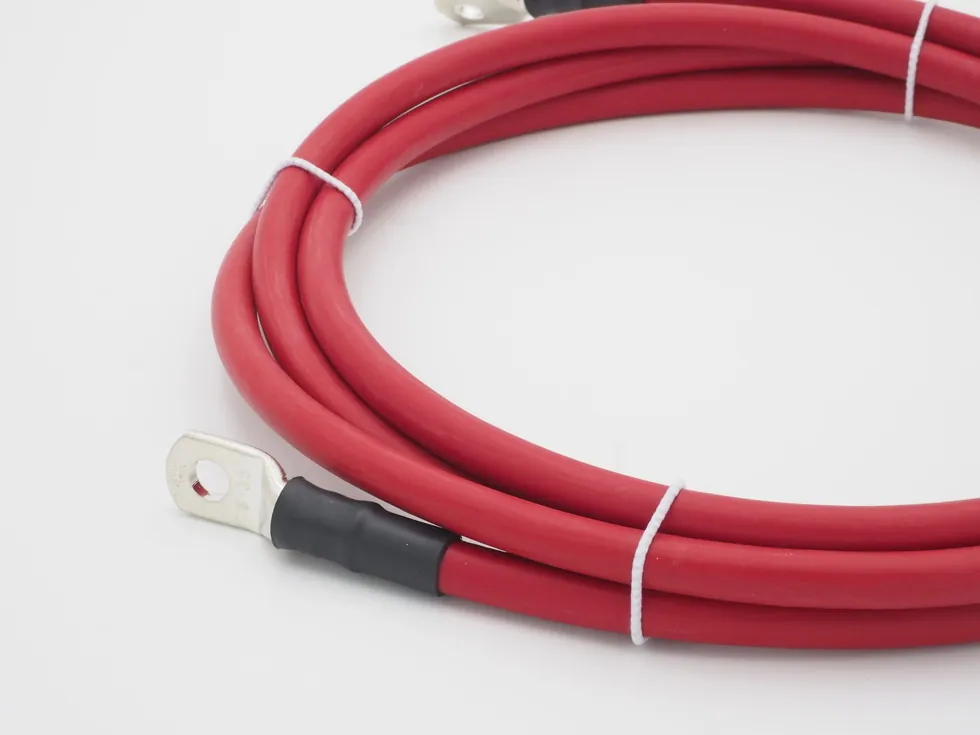
Termination with a ring or fork that is crimped onto the cable and bolted down, typical for large cross sections such as battery cables.
Cable setBasic term
Several assembled cables that are installed together, usually without a fixed branched structure. Wiring harness or cable set?
CAN busData bus
Serial bus system for vehicles and machines. Transmission runs over a twisted pair that is terminated with 120 Ω at both ends. CAN bus cable sets
Cavity plugSealing
Plug for the unused cavities of a sealed connector, so that the housing stays sealed. Single wire seals and cavity plugs
Conductor classIEC 60228
Classification of conductors by their construction, from class 1 (solid) to class 6 (extra fine stranded); higher classes are more flexible. Conductor classes and strand construction
ConnectorComponent
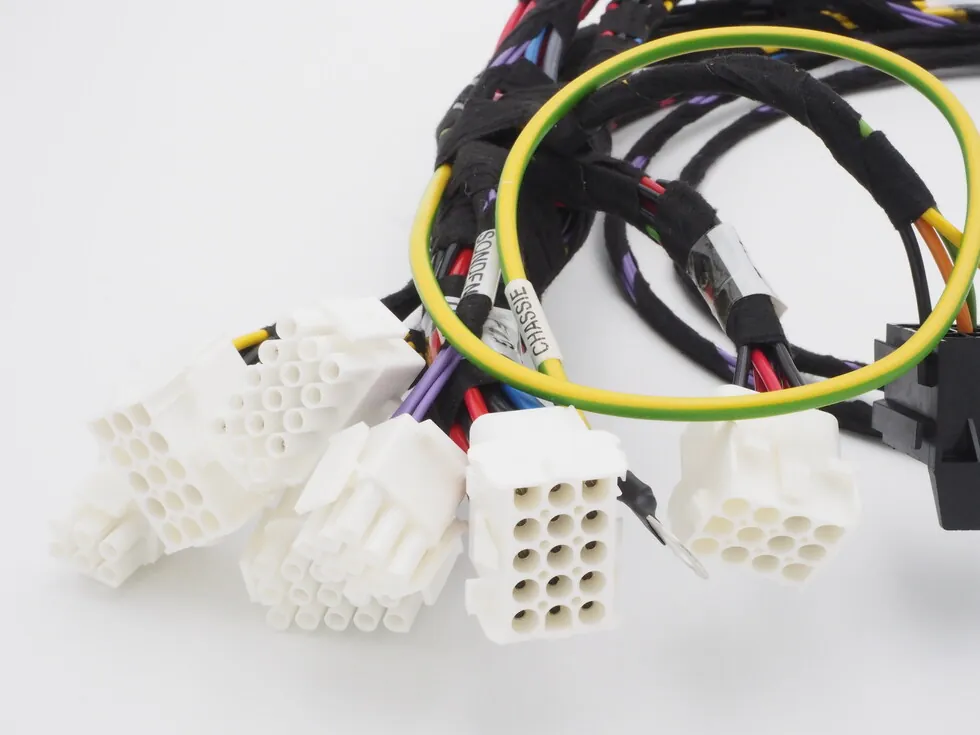
Separable connection made up of a housing and contacts, through which cables are connected to devices or to other cables.
Continuity testElectrical testing
Checks whether every cable connects the correct contacts (pin assignment) and has no break.
Corrugated tubeCable protection
Corrugated plastic tube that protects cable bundles against mechanical load; often slit so that the cables can be laid in. Cable protection compared
Crimp force monitoringCFA, process control
Records the force curve of every crimping operation. Deviations from the reference curve reveal faults such as missing strands or insulation in the crimp.
Crimp heightTest characteristic
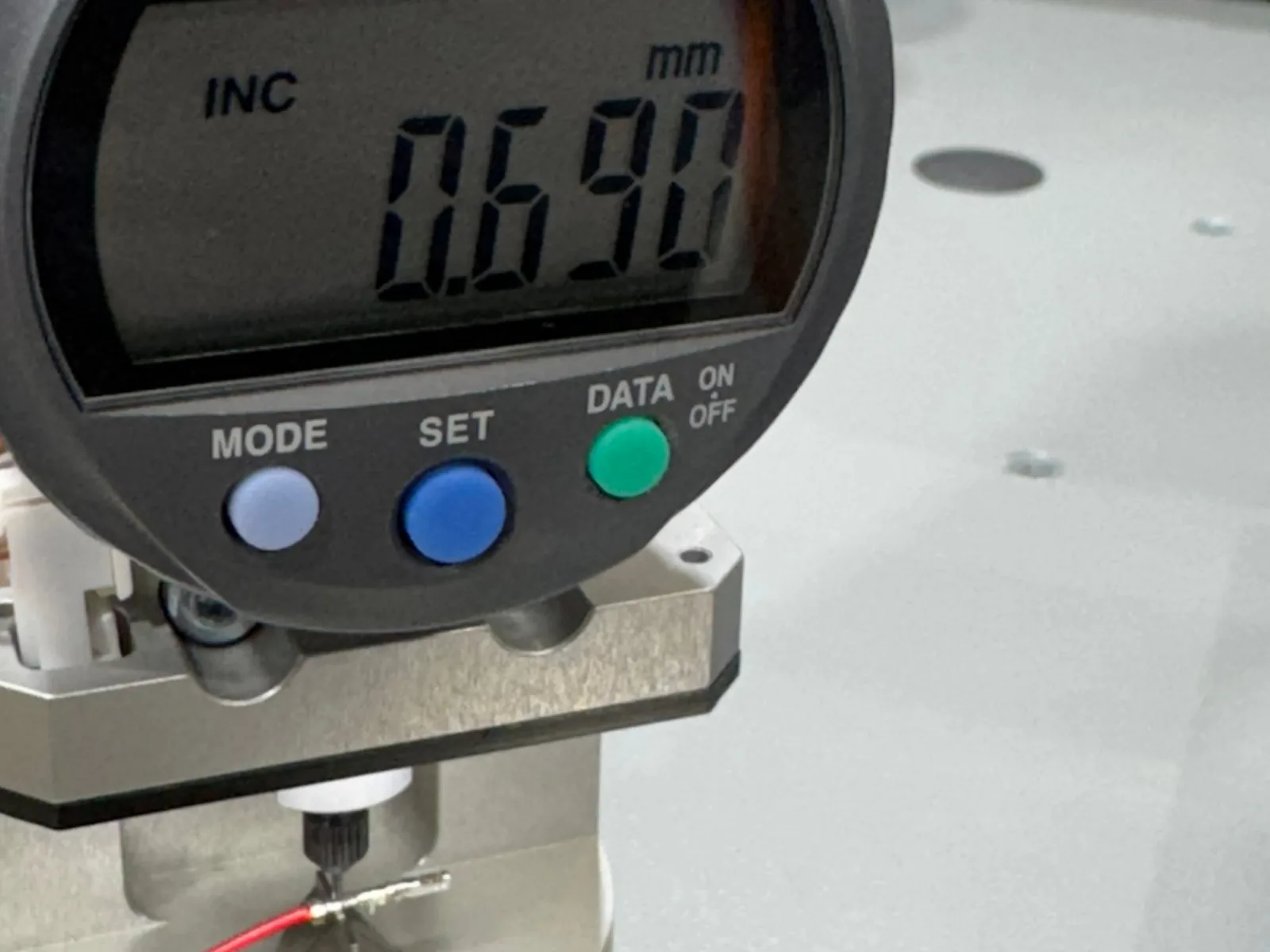
Height of the finished crimp over the conductor area. It is the most important dimension for the quality of the crimp. The contact manufacturer specifies the target value for every combination of contact and cross section.
CrimpingJoining technology
Permanent connection of conductor and contact by plastic deformation of the crimp barrel, gas tight when carried out correctly and without any heat input.
Cross sectionConductor
Conductor area in mm². It determines current carrying capacity and voltage drop; Powertune processes 0.013 to 70 mm², and up to 95 mm² where required. Choosing the right cross section
Cutting listManufacturing
List of all cables in a wiring harness with type, cross section, colour, length and stripping lengths. It is the input for the fully automatic cable processing machine.
DataMatrix codeMarking
Two-dimensional code that stores a part or serial number, for example, in machine readable form in a small space, such as on the label of a wiring harness.
EPLAN Harness proDCAD software
Software for the 3D design and documentation of wiring harnesses. We use it in our design office. Wiring harness design with EPLAN
ESDElectrostatic Discharge
Electrostatic discharge. ESD protective measures prevent damage to sensitive electronic components. Powertune has an ESD protected room for this purpose.
FLRYAutomotive cable
Widely used automotive cable: F for Fahrzeugleitung (automotive cable), L for stranded, R for reduced wall thickness, Y for PVC insulation. Automotive cables at a glance
Framework contractPurchasing
Agreement on quantities, prices and term, from which the customer calls off partial quantities as required.
Fully automatic cable processing machineMachine
Machine that cuts cables to length, strips them and fits seals and contacts in a single pass while monitoring every step. At Powertune this is a Komax Gamma 450, for example. Machinery
Heat shrink tubingCable protection
Tubing that contracts under heat. It insulates, protects and seals joints when it is coated with adhesive on the inside.
High voltageHV
In a vehicle, voltages above 60 V DC or 30 V AC. High voltage cables are usually marked in orange. High voltage cable sets
High voltage testInsulation testing
Tests the dielectric strength of the insulation with a raised test voltage, in order to detect insulation faults reliably.
HVILHigh Voltage Interlock Loop
Low voltage safety loop running through the high voltage connectors. If a connector is separated, the loop opens and the system switches off the high voltage.
Initial sample inspectionRelease
Inspection of the first parts from the series process against drawing and specification, documented in an initial sample inspection report. It is the basis for the series release.
Inkjet printingMarking
Non-contact printing on the cable insulation with ink, for example with cable numbers or part designations.
Insulation resistanceTest characteristic
Resistance of the insulation between conductors or to earth. A high value indicates intact insulation.
IP ratingIEC 60529
Code for the protection of an enclosure against foreign bodies (first digit) and water (second digit), for example IP67. Selecting connectors
KanbanLogistics
Consumption driven replenishment: when a container is empty it triggers the resupply, for example through kanban racks on the customer assembly line.
M8 and M12Circular connectors
Standardised circular connectors with an 8 mm and 12 mm thread respectively. They are the standard interfaces for sensors and actuators in automation. M8 and M12
MESManufacturing Execution System
Production management system that schedules and controls orders and records process data for traceability.
MicrographTest method
Ground cross section through a crimp. It makes compaction, voids and defects visible.
On board power systemVehicle technology
All the cables, connectors and distribution boxes that supply a vehicle with power and signals. It is usually made up of several wiring harnesses.
Pin assignmentDocumentation
Allocation of every cable to a contact in the connector. It is the basis for assembly and electrical testing.
PPAPProduction Part Approval Process
Procedure established in the automotive industry for releasing series parts, with defined supporting documents. PPAP for wiring harnesses
Pull-out forceTest characteristic
Force with which a crimped conductor can be pulled out of the contact. It demonstrates the mechanical strength of the crimp. Testing crimp quality
Requirements specificationDocumentation
Description of all the requirements the customer places on a product. It is a good basis for the quotation and the design.
Resealable bagPackaging
Reclosable bag in which cable sets and wiring harnesses can be delivered individually packed.
Semi-automatic machineMachine
Machine that is fed with the cable by hand and then carries out steps such as stripping, fitting the seal and crimping automatically, ideal for samples and smaller series.
ShieldingEMC
Conductive covering of braid or foil around the cores, which conducts away coupled-in interference. Shielding in the wiring harness
Single wire sealSeal, grommet
Seal on the single core which seals the contact inside the connector housing against moisture and dirt.
SpliceConnection
Point at which several cables are joined electrically, for example by ultrasonic welding. Ultrasonic splice
Stranded conductorConductor construction
Conductor made up of many thin individual wires. Stranded conductors are more flexible than solid wires and are the standard in a wiring harness.
StrippingProcessing
Removing the insulation at the cable end over a defined length without damaging the strands. With sheathed cables the outer sheath is stripped back as well.
TapingCable protection
Wrapping cable bundles with adhesive tape, for example of fabric or PVC. The tape holds the bundle together and protects against abrasion and rattling.
Test moduleTest technology
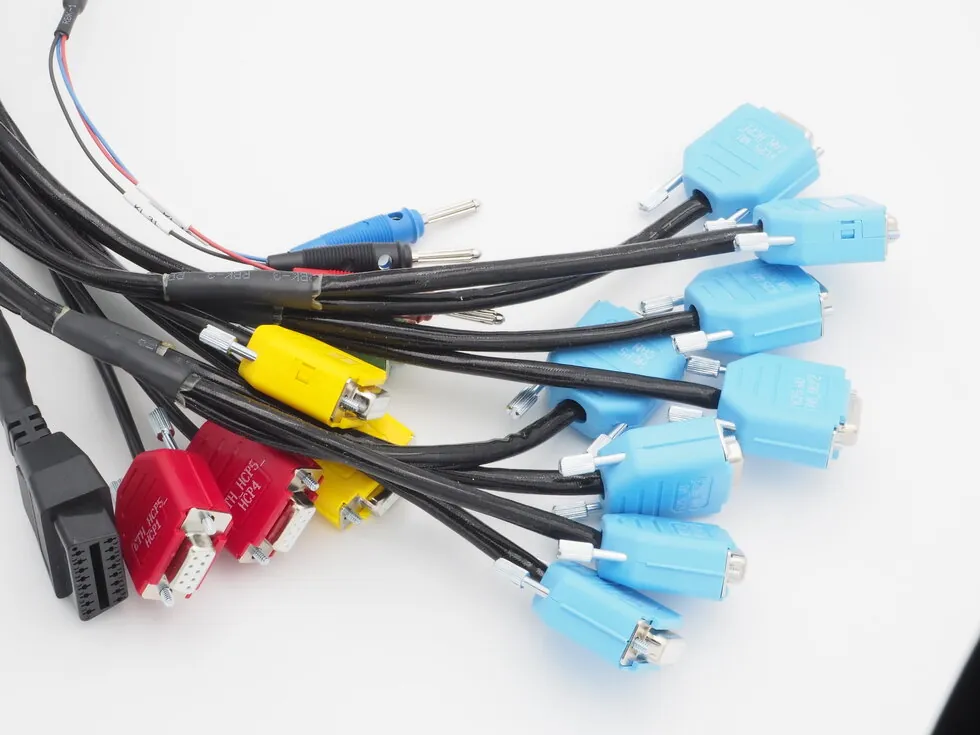
Fixture with the mating connector for a connector, through which the test system contacts the wiring harness. At Powertune every test module carries its own number and a DataMatrix code.
Test recordRecord
Documentation of a test with part, change status, quantity or serial numbers, scope of testing, result and date.
TinningProcessing
Coating the ends of stranded conductors with solder, so that the individual wires hold together or can be soldered easily.
TraceabilityQuality
Ability to trace material, process and testing for every delivery, at Powertune down to the individual cable.
TwistingProcessing
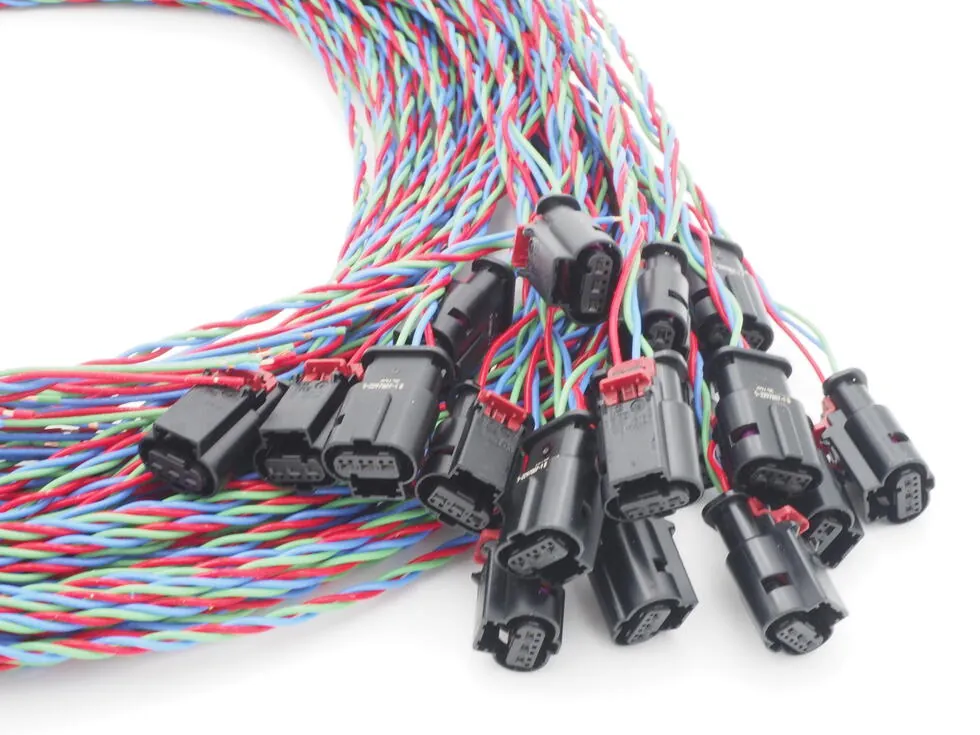
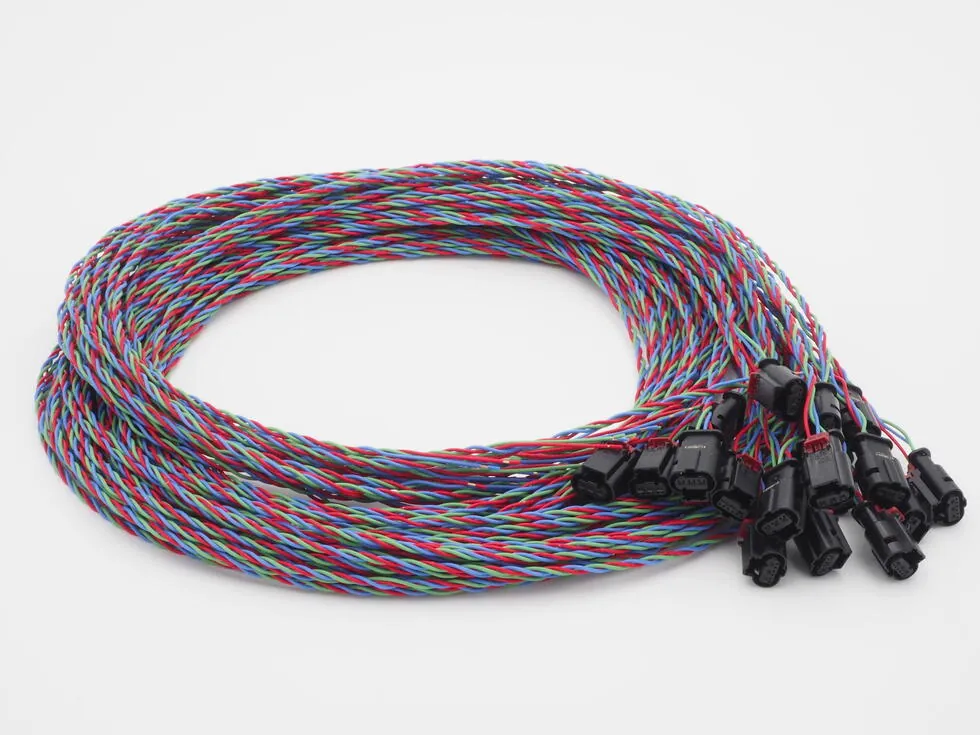
Laying two or more cores around each other with a defined lay length. This improves immunity to interference, for example with CAN bus cables. Twisted cables
Ultrasonic weldingSplice
Welding of strands by high frequency mechanical vibration under pressure, without any filler material such as solder.
Wire end ferruleContact
Metal sleeve that is crimped onto the end of a fine stranded conductor so that it can be connected securely in terminals. More on wire end ferrules
Wiring harnessWire harness
Structured bundling of cables with connectors and protective components, which distributes power, signals and data between components.


Technical guides

Well prepared for your project.

Practical knowledge for design and purchasing, from the checklist to the sizing.

Checklist

What we need for a quotation

  • Drawing, bill of materials, 3D data, sample or requirements specification
  • Required quantities (prototype, pre-series or series)
  • Materials, cables and connectors, if specified
  • Special technical specifications and ambient conditions
  • Scope of testing and documentation required
  • Target date
Checklist as a PDF How a project runs

Table & calculator

Converting AWG and mm²

The common AWG sizes with their metric cross sections, and why the current carrying capacity also depends on the installation method, the temperature and the insulation.

To the AWG table

Testing

Defining the scope of testing

We test continuity and short circuits on every wiring harness. High voltage, function and load tests are added depending on the requirements.

To quality assurance

Advice

A specific question about your project?

We support you as early as the development phase in selecting suitable cables, connectors, protection systems and fixing techniques.