The principle
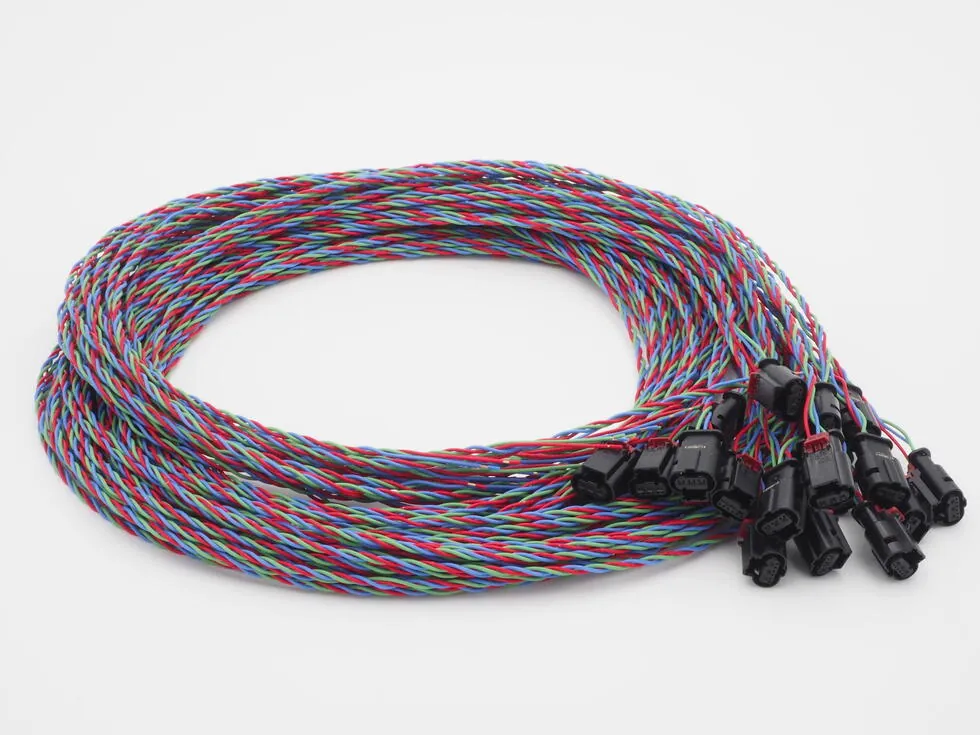
When the outgoing and return conductors of a signal are twisted together, they run close to each other over the full length and constantly change position. An external magnetic field then induces opposing voltages in adjacent lays, and these largely cancel each other out. Conversely, the fields of the two conductors also largely cancel each other out on the outside, so the cable radiates less.
When cables are twisted
- Differential data buses such as CAN
- Sensor cables with low signal levels, for example for speed or position sensors
- Cable pairs close to strong sources of interference such as motors or frequency converters
- Outgoing and return conductors of loads, to reduce magnetic fields
You can read more about data buses in the article CAN bus cable sets.
Lay length and processing
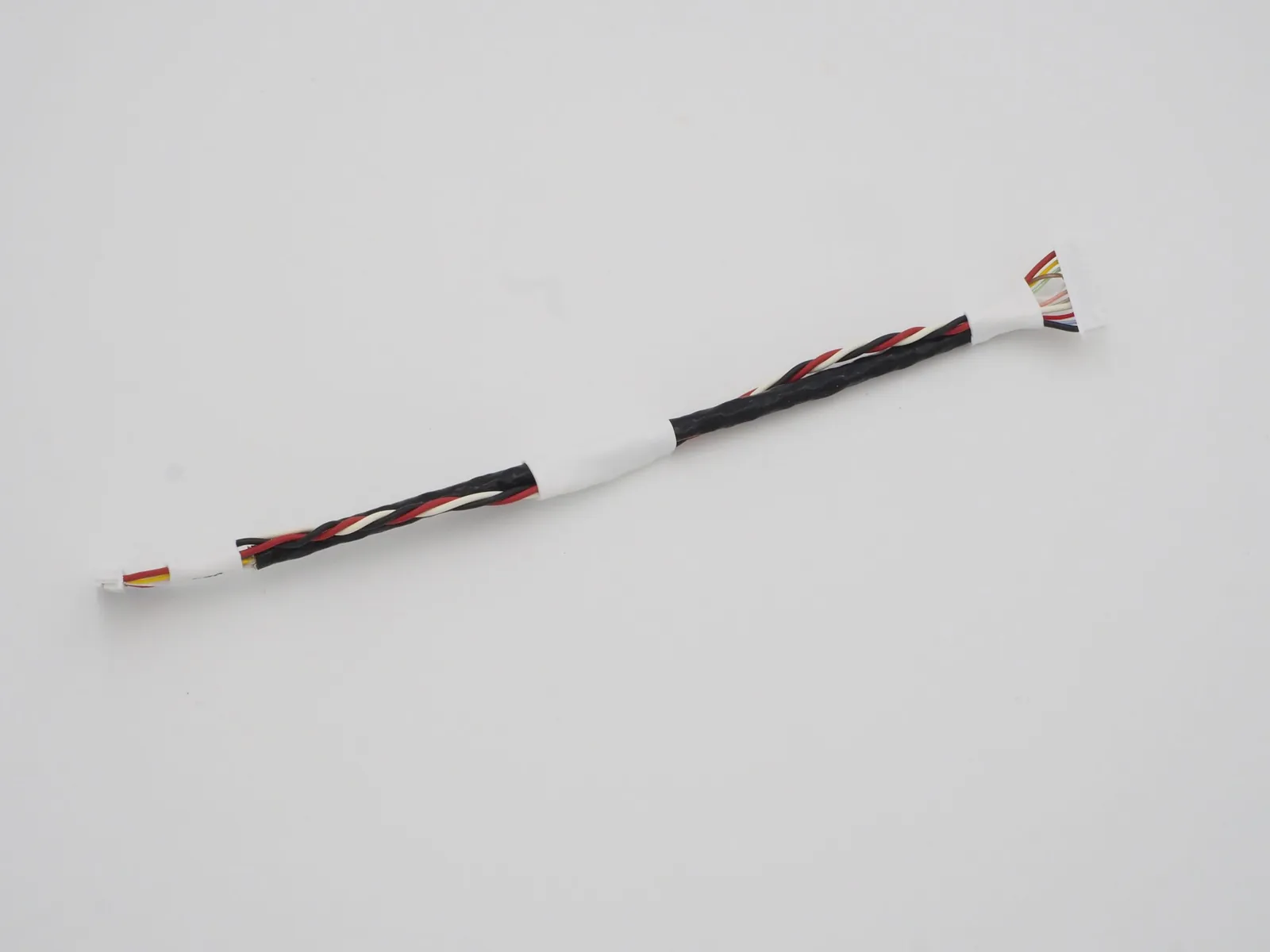
How effective the twisting is depends on the lay length, that is the length over which the conductors complete one full turn around each other. Shorter lays improve noise immunity, but they make the cable stiffer and use up more cable length. Requirements for this are set out in customer specifications or bus standards. It is also important that the twisting is maintained up to just before the connector and does not come undone at the ends and splices.
Twisting in production
Cables twisted by hand are uneven. In series production, cables are twisted by machine with a defined lay length and the ends are fixed. At Powertune this is done on the Komax BT 188 T twisting machine.