What is an assembly board?
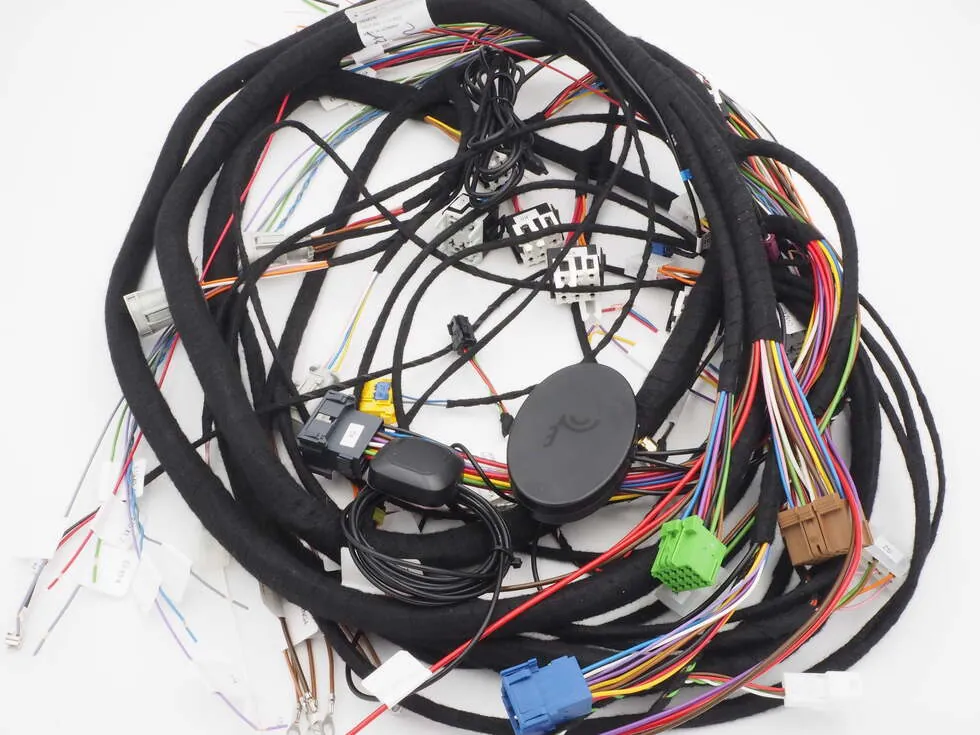
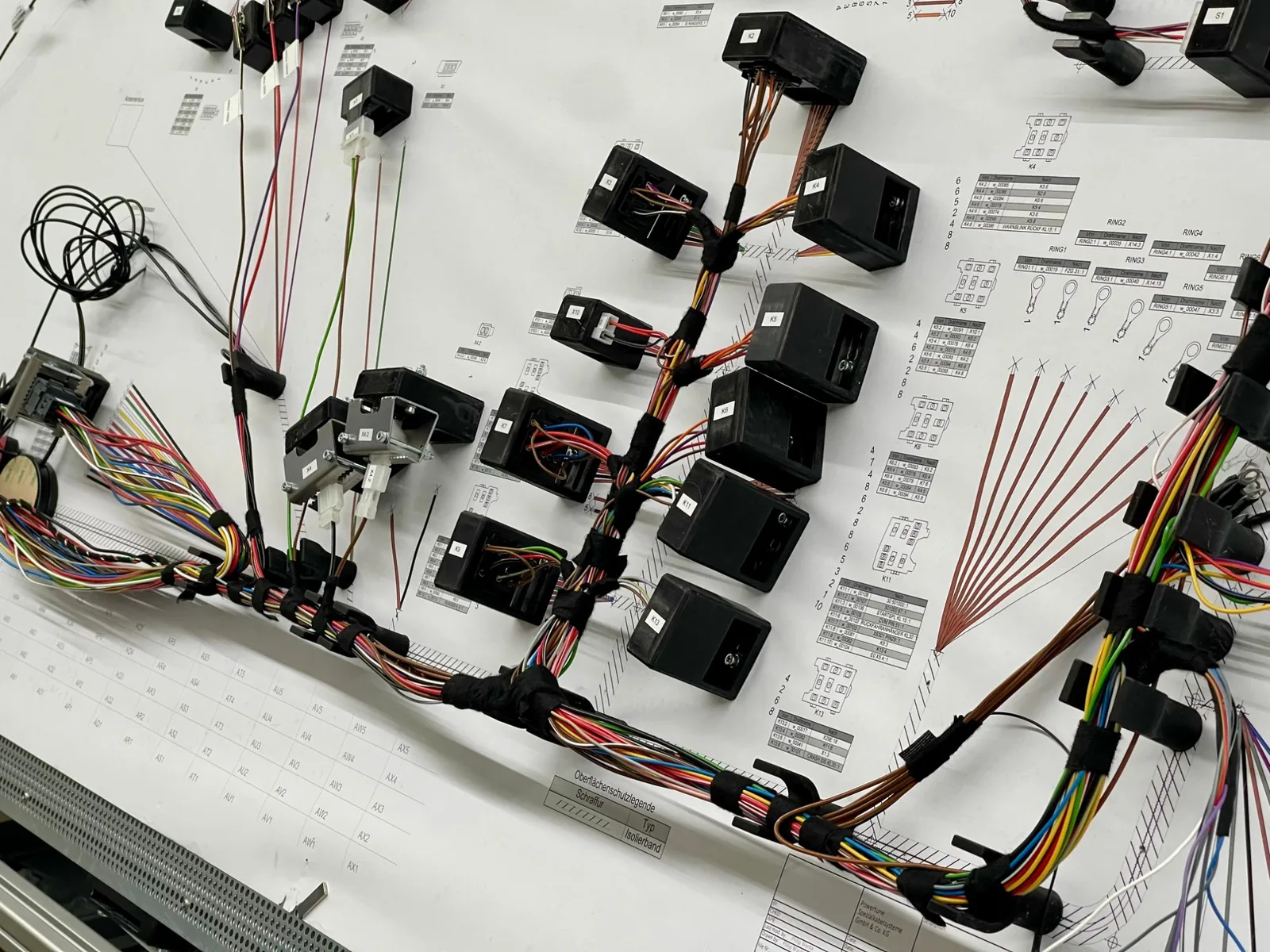
An assembly board (also called a layout board or a nail board) is a panel carrying the drawing of the wiring harness, usually to a scale of 1:1. Holders, forks and pins mark the route of the main trunk, the branch points and the positions of the connectors. The cables are routed along these guides until the wiring harness has its final shape.
How the assembly process works
- Lay out the pre-assembled cables (cut to length, stripped, crimped)
- Route the cables along the holders according to the plan
- Insert the contacts into the connector housings and lock them
- Bundle the branches, tape them and fit protective tubing
- Apply the marking
- Take the wiring harness off the board and test it electrically
Why the assembly board matters
The assembly board makes the geometry reproducible: every wiring harness has the same branch dimensions and lengths. It prevents cables from being mixed up, speeds up the assembly and makes errors visible before they reach the customer. For series production a dedicated board per wiring harness pays off; for samples it is often set up more simply.
Assembly board work at Powertune
We derive the assembly board drawing directly from the design, and for our own designs from EPLAN. Taping is done among other things with the KABATEC KTHB Smart taping unit, and every wiring harness is tested electrically after assembly.