Two levels: process and product
Quality assurance for wiring harnesses takes place on two levels. Process monitoring assesses every processing step, every crimp for example, as it happens. Final testing assesses the finished product: is every cable connected correctly, are there open circuits or short circuits? Only the two together give a complete picture.
Tests during crimping
- Crimp force monitoring: compares the force curve of every crimp with a reference curve and detects missing strands or crimped-in insulation, for example.
- Crimp height measurement: checks a central dimension of the crimp with a measuring device.
- Pull-out force test: determines the force needed to pull the conductor out of the crimp.
- Micrograph: shows the cross section of a crimp and makes voids or defects visible.
- Stripping and seal position monitoring: detects damaged strands and badly seated single wire seals.
Which of these tests are agreed in a given case depends on the requirements of the customer and the contact manufacturer.
The electrical final test
- Continuity: every cable connects the correct contacts (pin assignment) and is not interrupted.
- Short circuit: there is no unwanted connection between cables.
- Resistance: cable and contact resistances are within the permitted range.
- High voltage: the insulation withstands an increased test voltage. That matters in high voltage applications.
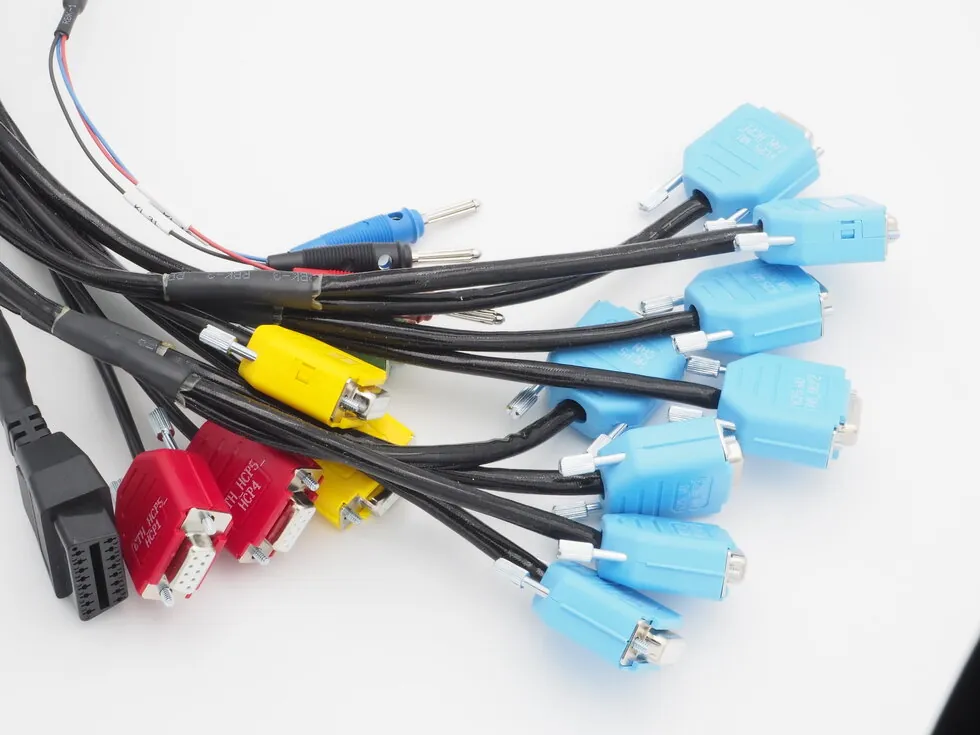
- Functional test: the wiring harness is tested with the components connected or simulated.
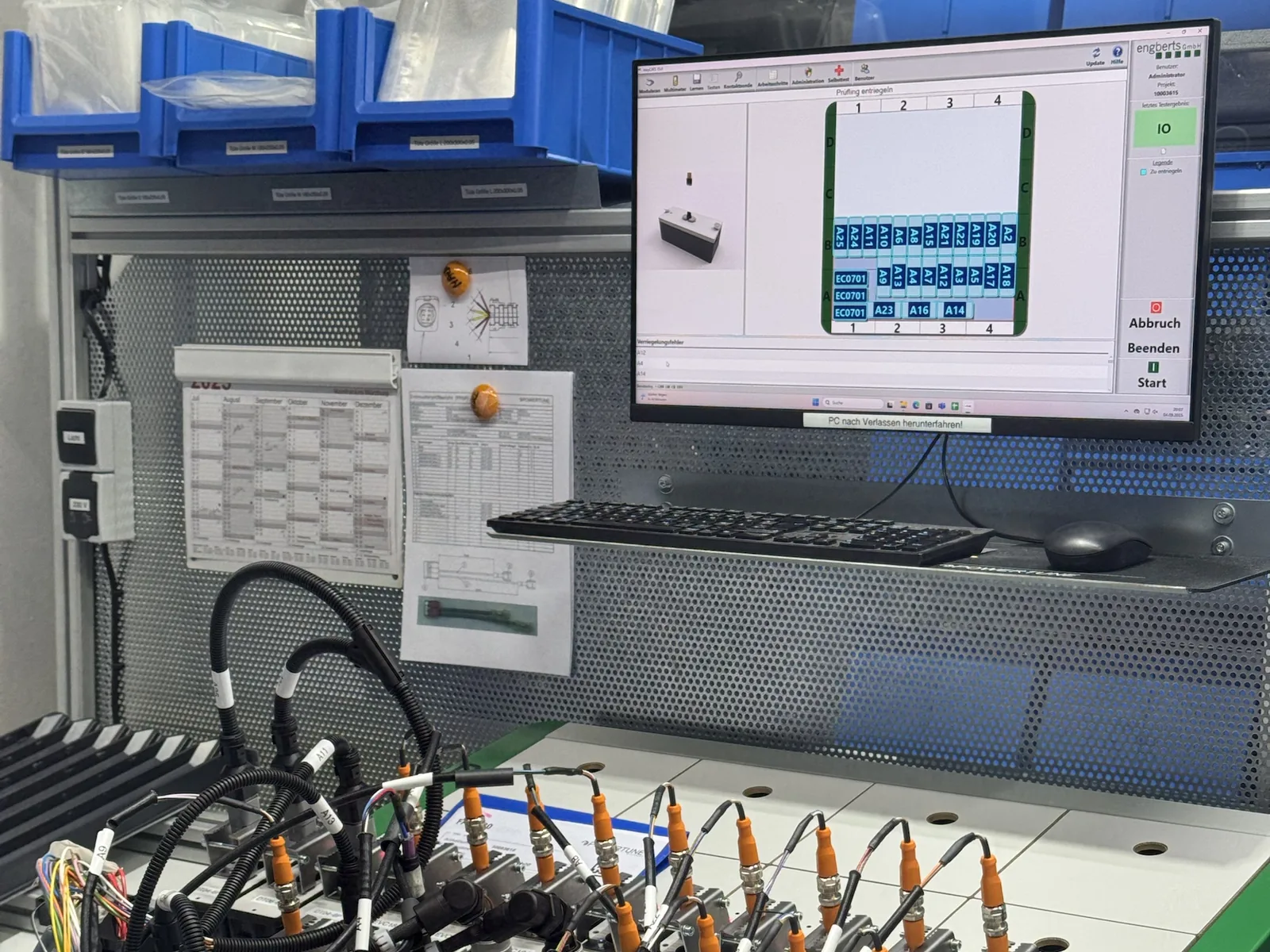
At Powertune every wiring harness goes through an electrical final test for continuity and short circuits; our test system records pin assignment, resistance and cable faults and logs the results. We carry out high voltage and functional tests as required.
Defining the right scope of testing
Not every test is necessary for every wiring harness. A sensible scope of testing covers the risks of the application: high voltage calls for an insulation test, safety relevant functions for a functional test, sealed connections for a monitored seal position. Define the scope of testing and the documentation as early as the enquiry, then they are binding in the quote and in series production.
Records such as test reports, measurement reports and documentation to PPAP are best clarified in advance as well. More on this under Testing & documentation.