What a shield is for
A shield surrounds the cores of a cable with a conductive layer. It diverts coupled interference before it reaches the signal and, in the other direction, keeps interference from leaving the cable. That matters for data cables, sensitive sensor signals and cables running close to frequency converters, motors or high voltage systems.
Types of shield
- Braided shield made of copper wires: flexible and effective at low to medium frequencies
- Foil shield: full coverage, good at high frequencies, mechanically more sensitive
- Combination of foil and braid for high requirements
- Drain wire for easy contacting of foil shields
Terminating the shield correctly
A shield only works if it is connected to the reference potential with low impedance and over as large an area as possible, ideally all the way around at the connector housing or through a shield clamp, not through a long wire. Whether it is terminated at one end or at both ends depends on the sources of interference, the frequencies and the grounding layout, and is defined during design.
- Do not damage the shield when stripping the outer sheath
- Keep the terminated ends short
- Contact the shield all the way around at the transition into the connector
- Test the shield continuity electrically
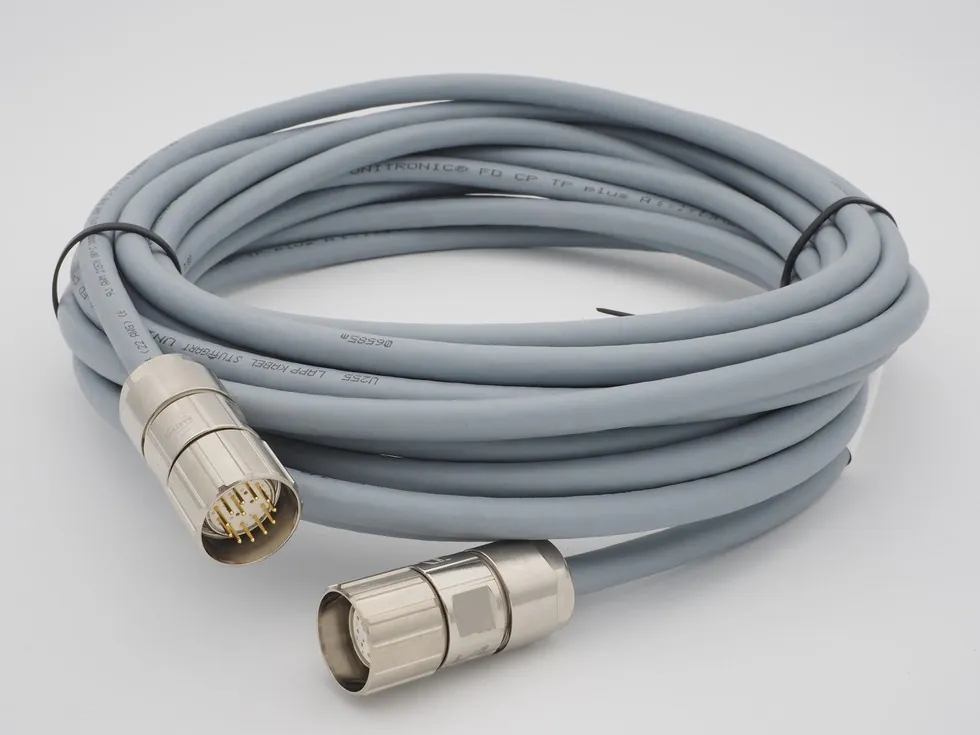
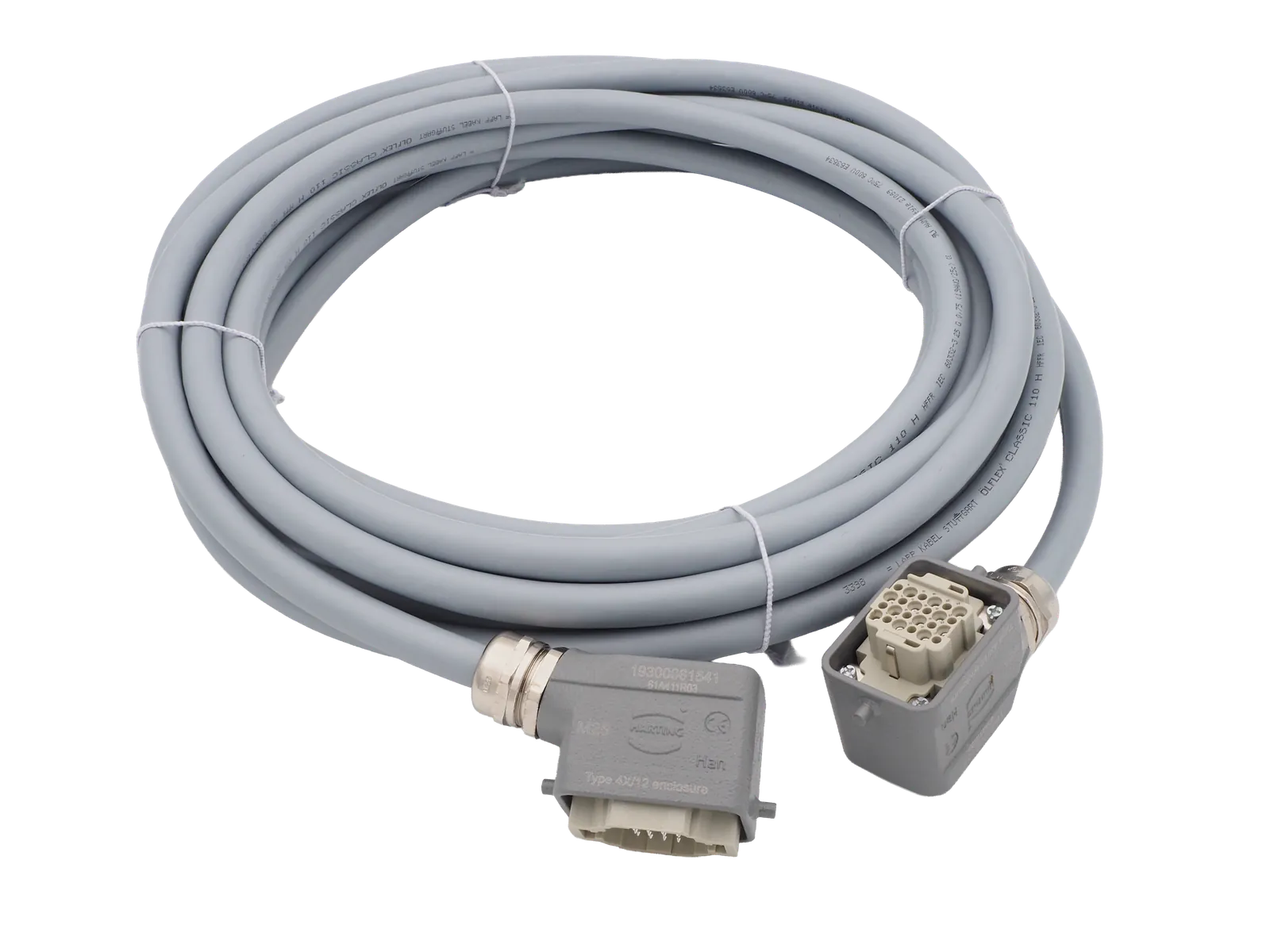
Shielded cables at Powertune
We assemble shielded signal, data and multicore cables. Sheathed and multicore cables are processed on the Komax Kappa 340 R with its rotary and slitting unit. How the shield is terminated and tested in your project is something we define during design.