Our own solar power: our production runs on photovoltaics and battery storage
Since May 20, 2026 a battery storage system has complemented our 100 kW photovoltaic system, which has been running since 2017. Since then we have covered our electricity needs almost entirely from our own generation, even during a power cut.
Photovoltaics and battery storage
Our photovoltaic system has an output of 100 kW and has been running since 2017. It works with four inverters at 25 kW each and generates the electricity for our production in Kitzingen. In 2025 it produced 86,568 kWh.
On May 20, 2026 we put a battery storage system into operation: a SolaX Triple Power (TP-HS36) with 32.4 kWh. For this, one of the four inverters was replaced by a SolaX unit. It controls the battery and works together with the three SMA inverters.
The battery takes up surplus solar power and releases it again when the sun is not shining. That changes the balance considerably: in 2025, without the battery, we covered 66 per cent of our electricity needs ourselves. From May to September 2026, with the battery, it was 98 per cent.
What the battery changes
A photovoltaic system without storage delivers when the sun is shining, not when the machines are running. That was exactly our problem: in 2025 the system generated 86,568 kWh, of which we used only 15,282 kWh ourselves. The rest, 71,286 kWh, went into the grid, and in the evening we drew electricity back. On balance we covered 66 per cent of our needs ourselves and bought in 7,803 kWh.
The battery shifts the solar power into the hours in which we need it. From May to September 2026 our consumption came to 10,840 kWh, and 180 kWh of that came from the grid. That is 98 per cent from our own generation.
Arithmetically, the 2025 generation replaces around 31 tonnes of CO2, calculated with 363 grams per kilowatt hour for the German electricity mix (Umweltbundesamt, the German Environment Agency, 2024).
- 2025 without storage: 66 per cent self-sufficiency, 7,803 kWh from the grid
- May to September 2026 with storage: 98 per cent self-sufficiency, 180 kWh from the grid
- Generation in 2025: 86,568 kWh, of which 71,286 kWh fed into the grid
- Yield per installed kilowatt in 2025: around 866 kWh
Even during a power cut
If the public grid fails, a grid isolation switch disconnects our system from the grid. Photovoltaics and battery then keep supplying the plant, and we work self-sufficiently.
For our customers that means additional security of supply.
Why we do this
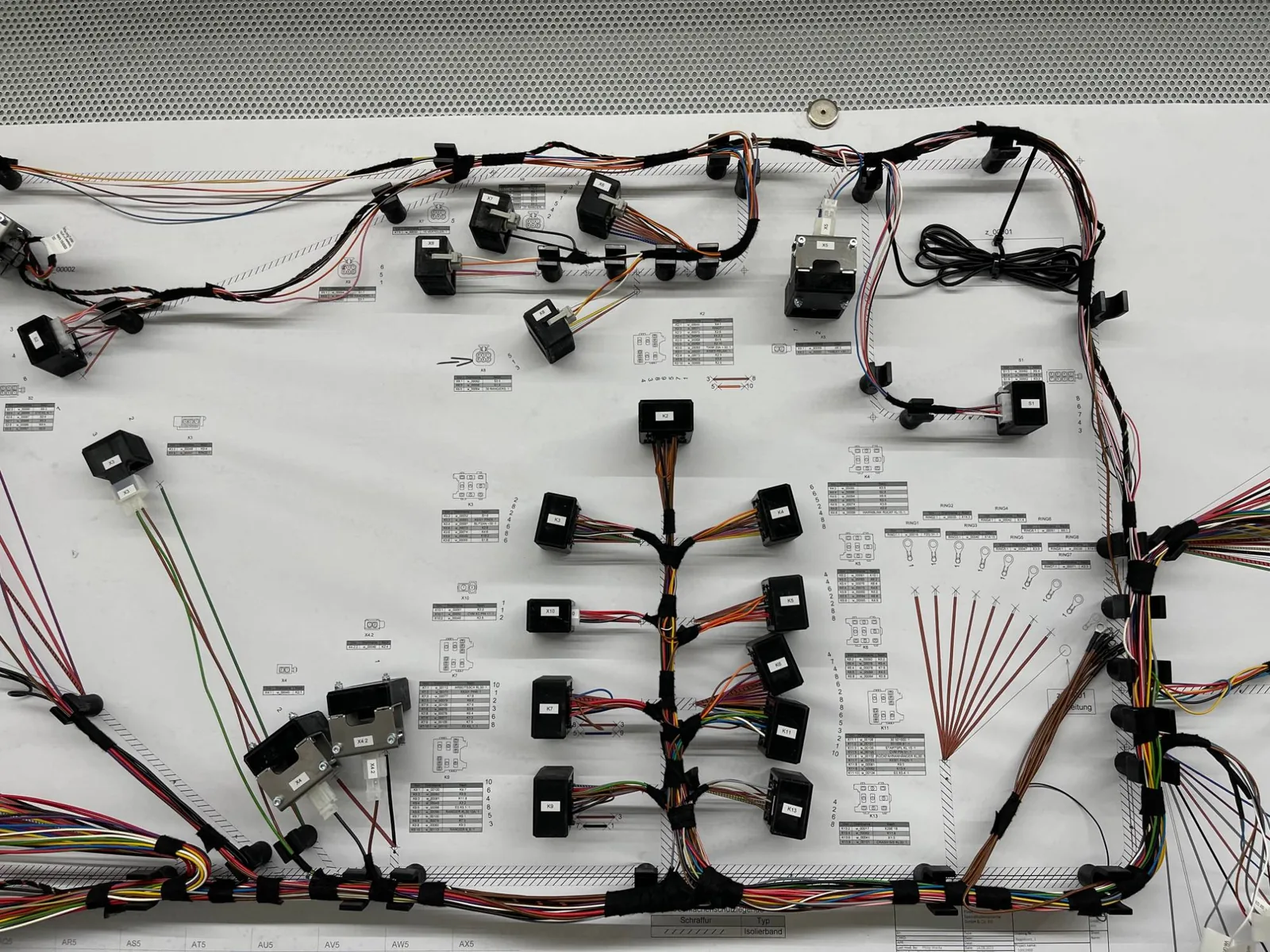
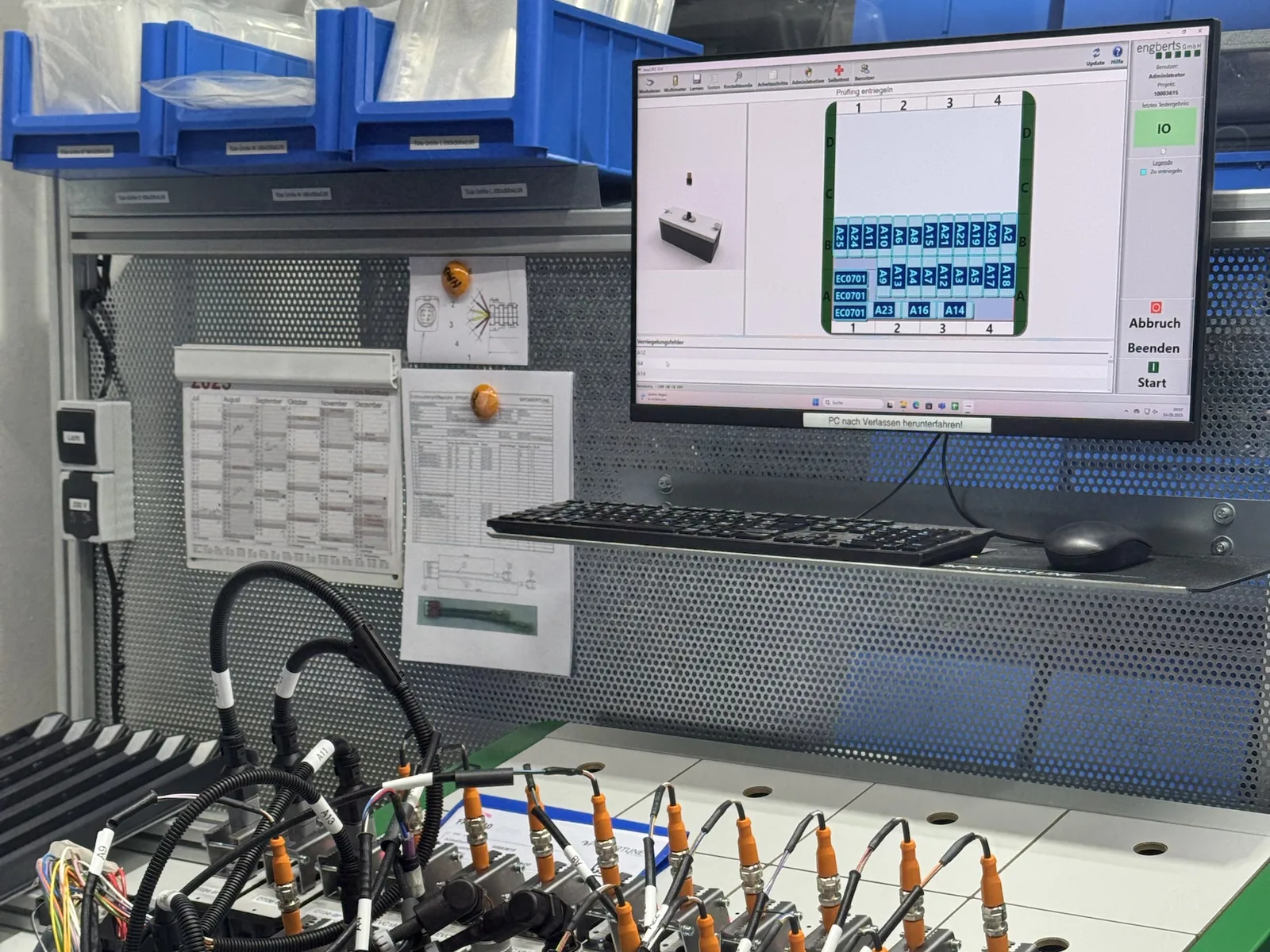
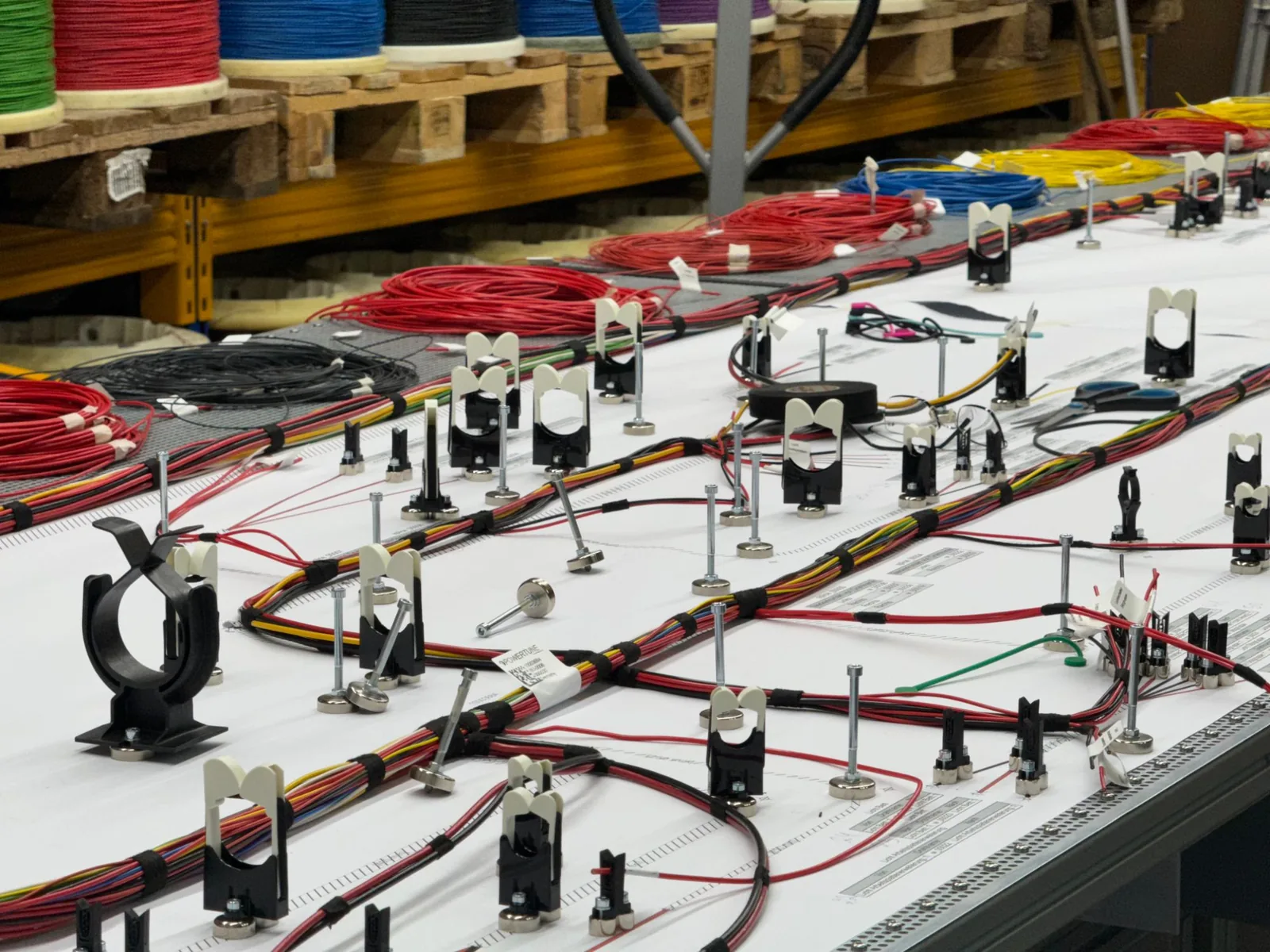
Cable assembly needs electricity for fully automatic cable processing machines, crimping presses, test systems and lighting. When that electricity comes from our own system, emissions and dependence on energy prices fall at the same time.
More and more customers ask about energy and sustainability in supplier assessments. We are happy to provide information about our energy supply. Get in touch through the contact form.