How an ultrasonic splice is made
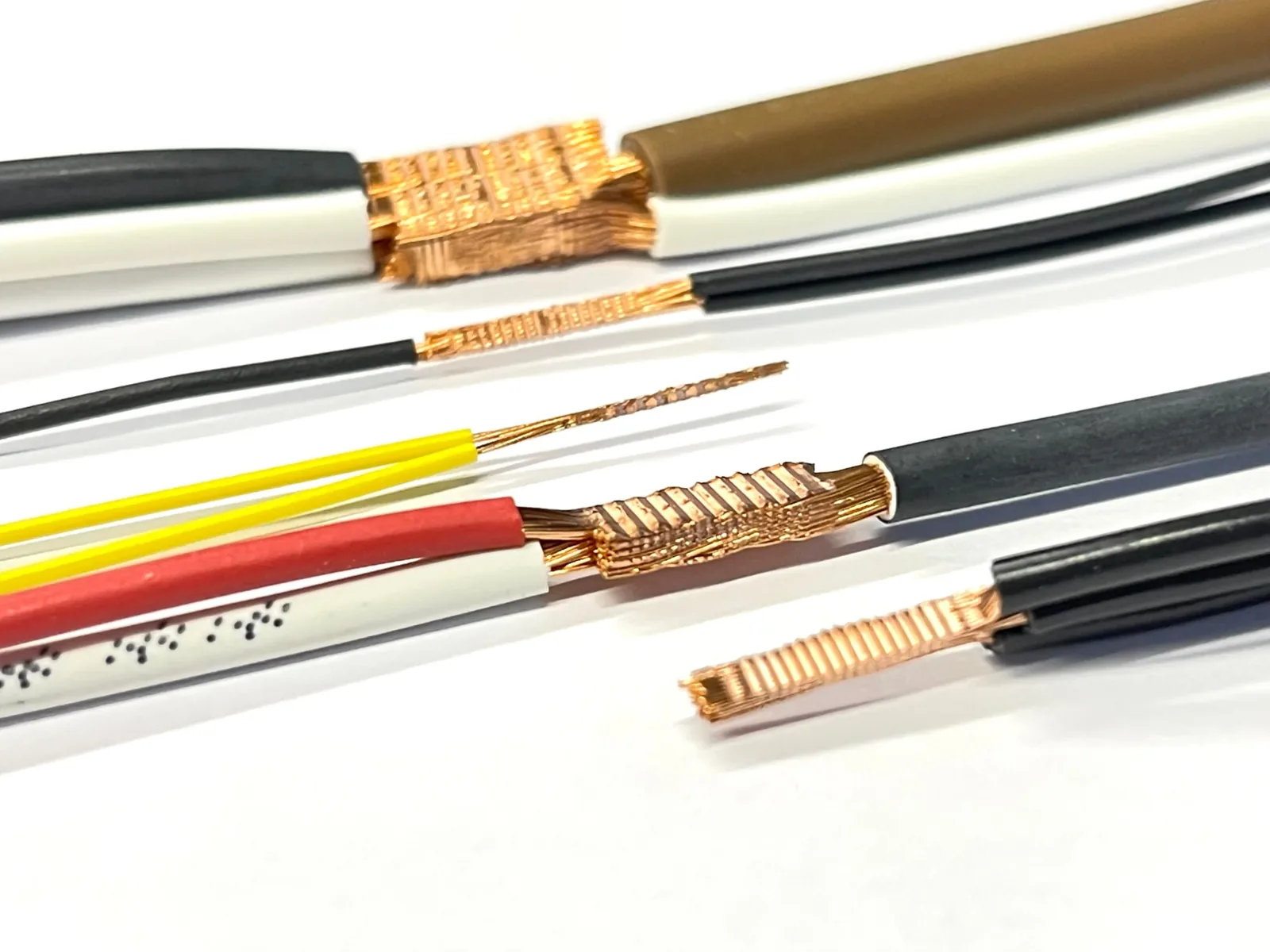
The stripped strands of several cables are pressed together between a vibrating sonotrode and an anvil. High frequency mechanical vibration rubs the wires against each other, breaks up oxide layers and joins the metals into a metallurgical bond without melting them. The result is a compact, solid node.
What splices are used for in the wiring harness
- Ground distributions where many cables come together at one point
- Power distributions for several loads
- Through nodes where one cable continues and branches off
- End nodes that combine several cables at one end
Advantages over other connections
- Compact and light, without added material such as solder or a sleeve
- Low contact resistance thanks to the metallurgical bond
- No rigid, solder soaked zone in the stranded conductor
- Reproducible thanks to a parameterised process
After welding, the node is insulated, usually with heat shrink tubing, and integrated into the wiring harness.
Assuring quality
Quality depends on the parameters for the particular combination of cross sections. Energy, pressure and amplitude are set and monitored accordingly. To approve new combinations, splices are typically tested mechanically, for example with pull or peel tests. In the finished wiring harness, the electrical test proves that all cables of the node are correctly connected.
At Powertune, ultrasonic splices are produced on a Schunk Minic III. For an overview of all joining techniques, see the article Crimping, soldering or ultrasonic welding?