What cable protection guards against
Cable protection keeps cables safe from mechanical, thermal and chemical loads: abrasion on edges and moving parts, crushing, heat close to the engine and the exhaust system, oil, fuel, cooling lubricants and UV radiation. At the same time it holds the cables together in one bundle and makes the wiring harness easy to handle.
Corrugated tube
Corrugated tubes made of plastic protect well against abrasion, crushing and dirt and still stay flexible. Slit versions can be fitted over the bundle afterwards; for engine compartments there are heat resistant grades. Branches are finished neatly with matching moulded parts or with tape.
Braided sleeve
Braided sleeves made of plastic fibres are light, flexible and expandable. They protect against abrasion and give the wiring harness a clean appearance; depending on the material they also suit higher temperatures. Metal braids can serve as a shield as well.
Heat shrink tubing
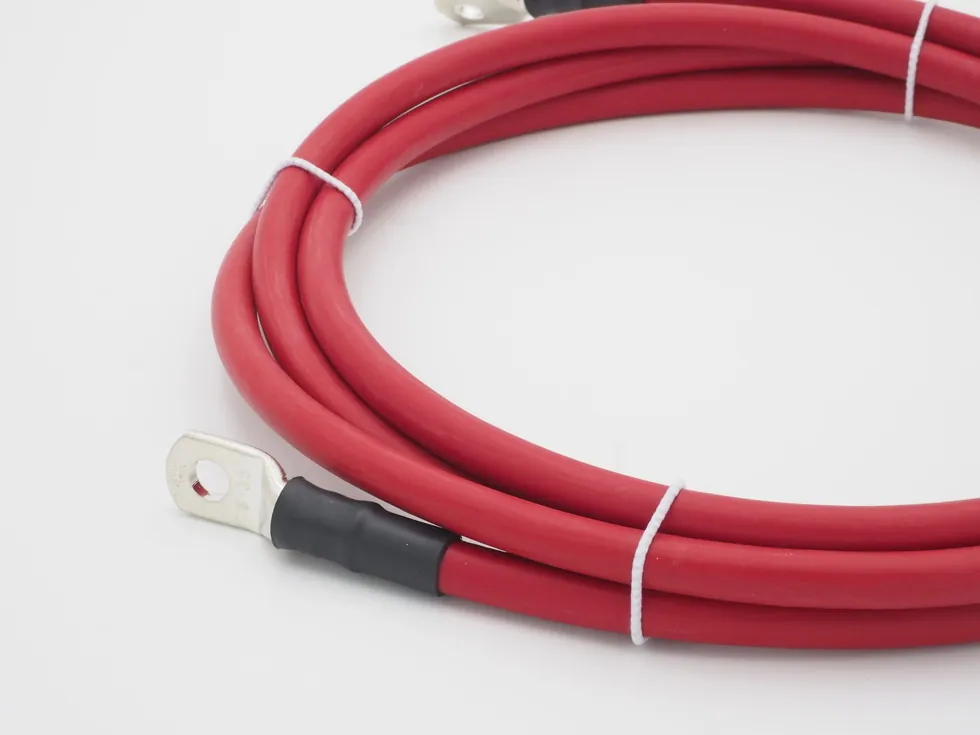
Heat shrink tubing contracts under heat and fits tightly around a cable, a splice or a transition. It insulates, relieves strain at transitions and keeps moisture out; versions with an inner adhesive provide an additional seal. Typical uses are at splices, at transitions to connectors and for marking.
Adhesive and fabric tape
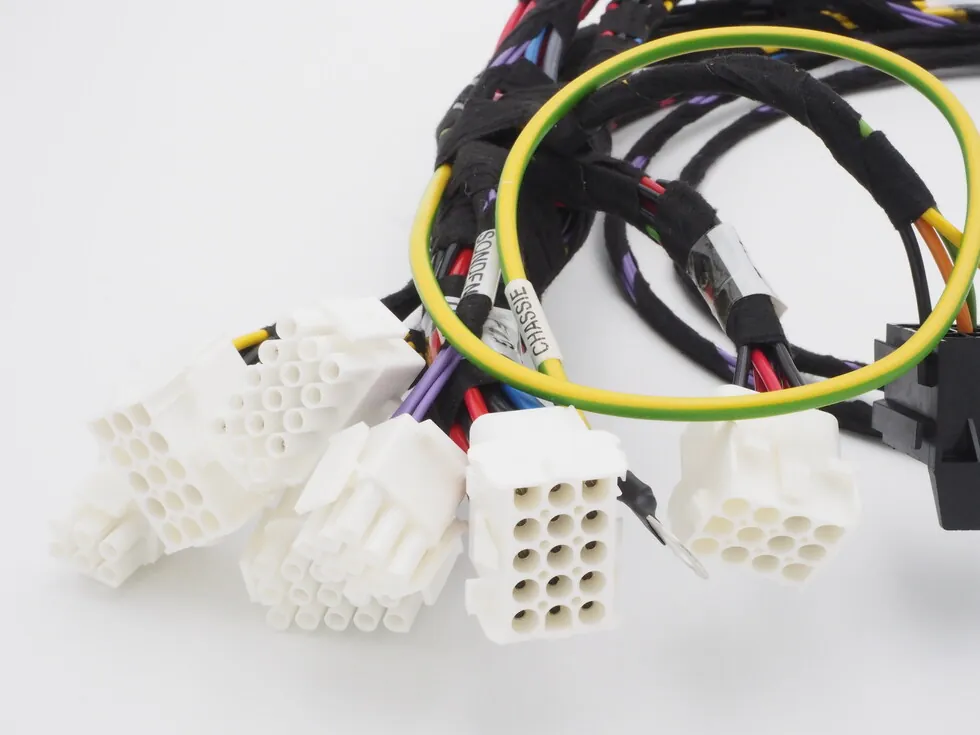
Tape bundles cables at single points or over their whole length. Fabric tapes protect against abrasion and dampen rattling noises, PVC tapes insulate. Machine taping gives an even wrap and reproducible results. At Powertune this is done with the KABATEC KTHB Smart taping unit and the KTB 50-E plus bundling machine.
How to find the right protection
- Temperature at the installation point, including brief peaks
- Mechanical load from edges, movement and vibration
- Media such as oil, fuel, cleaning agents and UV light
- Bending radii and space in the installation area
- Weight, for example in aviation
- Installation and service: slit or closed
We define the protection during design and cut the tubing to an exact fit, for example on the GlobalCut 100 PRO cutting machine.